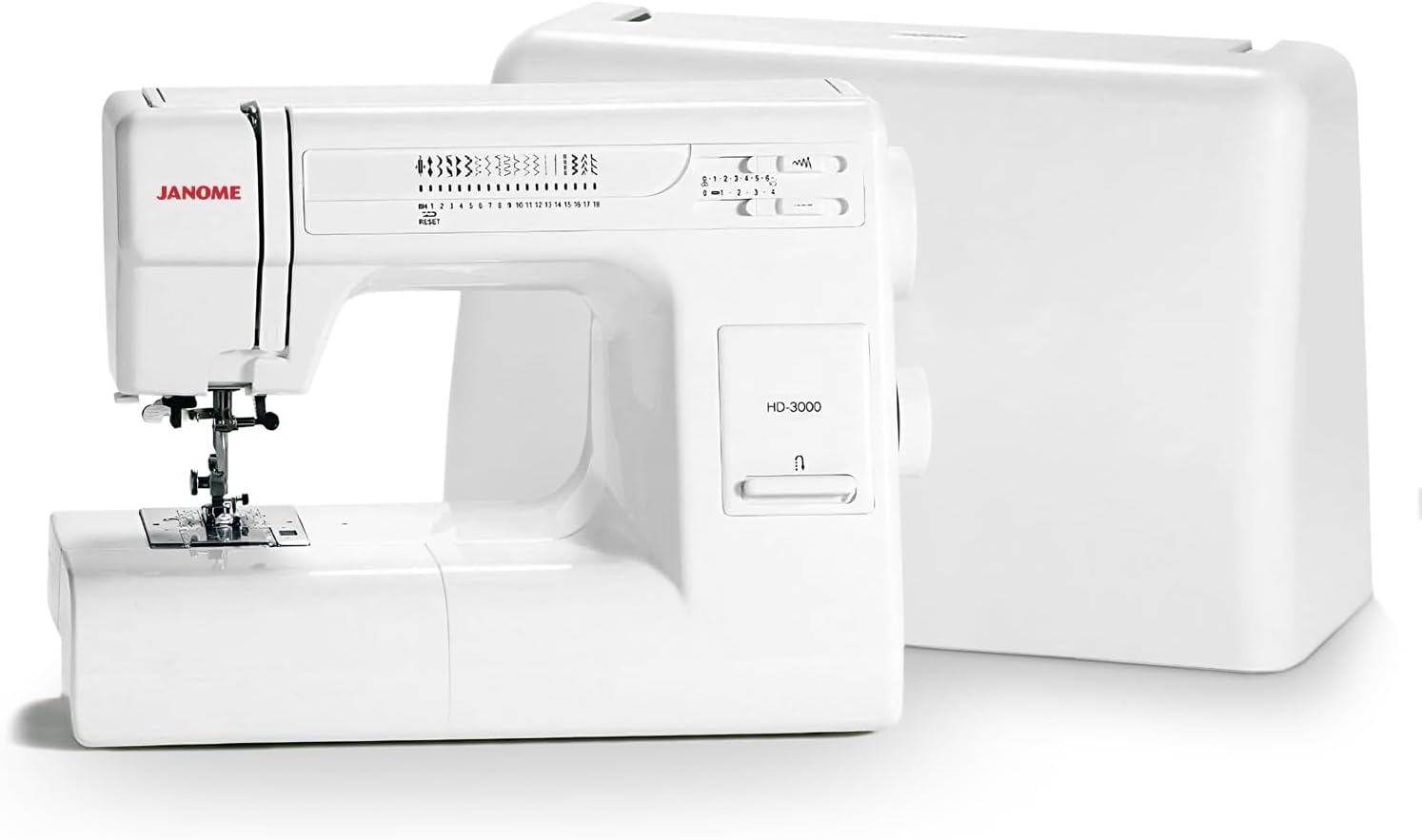
Singer Heavy Duty 4452 Review
Is it truly “Heavy Duty” or just a marketing gimmick? We tested the motor speed, the metal frame, and the denim-sewing capability of this Amazon giant to see if it survives the workshop.
Jump to Verdict ↓
The Myth of “Heavy Duty”
If you have spent any time looking for a mechanical sewing machine, you have undoubtedly seen the grey, blocky shape of the Singer Heavy Duty series. It is arguably the most ubiquitous sewing machine design in the modern world, found in classrooms, alteration shops, and home studios alike.
The Singer 4452 is the top-tier model in this specific lineup (sitting above the 4411, 4423, and 4432). But let’s clarify the terminology immediately: This is not an industrial machine. It will not sew leather saddles, boat sails, or 10-layer canvas belts all day long. True industrial machines typically sit in an oil bath and weigh over 60 pounds.
However, for the home sewist, the “Heavy Duty” moniker refers to a motor that is approximately 60% stronger than standard domestic machines and a stainless steel bedplate that allows fabric to glide smoothly. It bridges the gap for makers who find standard plastic machines too flimsy but aren’t ready to invest £1000+ in a Juki TL series. In this review, we determine if the 4452 is the robust workhorse it claims to be or if the plastic outer shell hides too many compromises.
TECHNICAL BLUEPRINT: MODEL 4452
Key Features: 4452 vs. The Rest
Why buy the 4452 when the 4423 looks exactly the same and costs less? It comes down to the stitch package and, more importantly, the Bonus Accessories.
1. The Bonus “Heavy Duty” Accessory Kit
The Singer 4452 distinguishes itself by including a blister pack of four specific presser feet that are usually sold separately. If you were to purchase these individually, you would spend an additional £30-£40. The star of this kit is the Walking Foot (also known as an Even Feed Foot). This mechanical foot is essential for feeding multiple layers of fabric—like denim hems or quilt sandwiches—through the machine at the same speed, preventing shifting and puckering. For intermediate sewists, this accessory alone justifies the price jump.
2. Speed Demon Performance
Most home machines sew at a respectable 700-800 stitches per minute (SPM). The Singer 4452 hits 1,100 SPM. It flies. If you are sewing long curtains, straight lines on a quilt, or batch-producing tote bags, this speed is a massive time-saver. However, speed without control can be dangerous. The foot pedal is sensitive, and beginners might find it feels like a “race car” compared to the “sedan” feel of a Brother machine. We recommend practicing on scrap fabric to master the pedal pressure.
3. Essential Tools for Tough Fabrics
Alongside the Walking Foot, the 4452 includes a Non-Stick Foot (perfect for vinyl, leather, or suede where a metal foot would drag) and a Clearance Plate (often called a “hump jumper”). The clearance plate is a simple but vital tool when hemming jeans; it levels the presser foot as you sew over thick side seams, preventing the needle from breaking or the machine from stalling. Speaking of needles, using the wrong one is the #1 cause of failure on this machine—read our guide on sewing machine needle problems to avoid destroying your timing on heavy fabrics.
The Grey Lineup: 4452 vs 4432 vs 4423
The Singer Heavy Duty lineup is notoriously confusing because the machines look nearly identical. Here is the definitive breakdown to help you choose:
- Singer 4411: The base model. 11 stitches. 4-step buttonhole (requires manual turning). No needle threader. Good only for absolute basics.
- Singer 4423: The most popular model. 23 stitches. 1-step buttonhole (automatic). Includes automatic needle threader. (See our full Singer 4411 vs 4423 comparison).
- Singer 4432: Identical motor to the others but has 32 stitches. Usually lacks the bonus accessories.
- Singer 4452 (This Review): Has the full 32 stitches of the 4432 AND the Bonus Accessory Kit (Walking foot, etc.). It is the “complete package.”
Verdict: If you plan to buy a walking foot eventually (which you should), the 4452 is the best value. Buying a 4423 and adding the feet separately often costs more than just buying the 4452 upfront.
Performance Stress Test
We didn’t just look at the specs; we simulated a typical “heavy duty” workflow to see where the 4452 shines and where it struggles.
The Denim Test
Using a size 16/100 Denim Needle, the 4452 successfully sewed through 6 layers of 12oz denim. The motor did not stall, though it did groan slightly on the start. The extra-high presser foot lifter is crucial here, allowing you to shove those thick layers under the foot. However, on 8 layers (belt loop thickness), you must use the handwheel to help it start, or you risk breaking the needle.
The Sheer Fabric Test
Can a heavy-duty machine handle silk? Surprisingly, yes. By adjusting the presser foot pressure dial (a screw on top of the machine), we were able to sew chiffon without dragging or puckering. However, because the feed dogs are aggressive, you must use a fine needle and potentially tissue paper stabilizer to prevent the fabric from being sucked into the bobbin plate.
The Knit/Jersey Test
The 4452 includes a “Stretch Stitch” setting (indicated in blue on the dial). While it works, it is not as refined as a serger. If you plan to sew a lot of stretchy athletic wear, you might find the feed dogs stretch the fabric out slightly. A serger machine is still superior for knits, but the 4452 gets the job done for basic t-shirt hems if you use the walking foot.
Maintenance: Keeping it Running
One downside of the 4452 compared to true vintage metal machines is that it runs “dry” in some areas and can be sensitive to lint. Because it runs at 1,100 SPM, it generates lint faster than slower machines.
The Golden Rule: You must clean the bobbin area after every major project. The drop-in bobbin case is easy to remove (no screwdriver needed for the plastic cover), but you will need to unscrew the metal plate occasionally to remove deep lint. If you hear a “clunking” sound, it is almost always a lint jam or a dull needle. Unlike computerized machines that beep at you, this mechanical beast will keep trying to sew until it jams, so listen to the motor sounds carefully.
The Honest Verdict
The Good Stuff
- Fast: 1,100 SPM is noticeably quicker than standard domestic machines.
- Accessories: The included walking foot and non-stick foot add massive value right out of the box.
- Simple: Mechanical dials are easy to understand, adjust, and fix compared to digital screens.
- Drop-in Bobbin: Top-loading bobbin with a clear cover makes it easy to monitor thread supply.
- Stainless Bedplate: Provides a smooth surface for fabric to slide over seamlessly.
The Bad Stuff
- Loud: It is not a quiet machine. It sounds like a machine gun at full speed.
- Plastic Casing: While the internal frame is metal, the outer grey shell is plastic and can feel hollow.
- Lighting: The single LED light is dim and casts shadows; you will likely need an external lamp.
- Sensitive: It requires frequent cleaning/oiling or it gets clunky fast.
Final Verdict: Who Should Buy It?
The Singer Heavy Duty 4452 is the perfect machine for specific types of makers. It occupies a unique sweet spot between cheap starter machines and expensive computerized models.
It is ideal for:
1. Cosplayers & Crafters: If you sew heavy canvas, faux fur, or multiple layers of cotton, the motor handles it well where others stall.
2. Intermediate Sewers on a Budget: If you want speed and reliability but can’t afford a Juki TL-2010Q.
3. Bag Makers: The non-stick foot and motor torque are great for sewing vinyl straps and interfacing.
However, if you are looking for delicate embroidery, decorative heirloom stitches, or whisper-quiet operation for a shared apartment, look elsewhere. This is a tractor, not a Tesla. It’s built to get the job done loudly and quickly.
Check Price on AmazonFrequently Asked Questions
Can the Singer 4452 sew leather?
Yes, it can sew garment-weight leather (like soft lambskin or up to 2 layers of tooling leather) provided you use a Leather Needle (Schmetz 100/16) and the included Non-Stick Foot. However, it will struggle with thick saddle leather or hard vegetable-tanned leather.
Is the Singer 4452 computerized?
No, it is a purely mechanical machine. This means no error codes to decipher, but also no “needle up/down” button or speed control slider. You control speed entirely with your foot pedal pressure.
What bobbins does the Singer 4452 use?
It uses Class 15 Transparent bobbins. Do not use metal bobbins or Class 66 bobbins, as they can damage the drop-in bobbin case and cause tension issues.
Does it come with a case?
It usually comes with a soft grey dust cover, not a hard carrying case. If you plan to travel with it to classes, we strongly recommend buying a separate padded tote bag to protect the dials.
Can I quilt a queen size quilt on this?
Technically yes, but the throat space (the space between the needle and the main body) is standard size, not extended. Rolling a large quilt through it will be a tight squeeze. For large quilts, you might prefer a machine with a larger throat space, like the Juki TL series or Baby Lock Jazz 2.