Serger vs Coverstitch Machine: The Ultimate Comparison Guide
If you have been sewing for a while, you have likely reached that frustration point where your homemade garments just don’t look “store-bought.” The seams might be a bit wavy, the hems pop when stretched, or the inside finish looks like a bird’s nest. This is usually the moment sewists start looking beyond their standard sewing machine and stumble into the confusing world of specialty machines: the serger vs coverstitch machine debate.
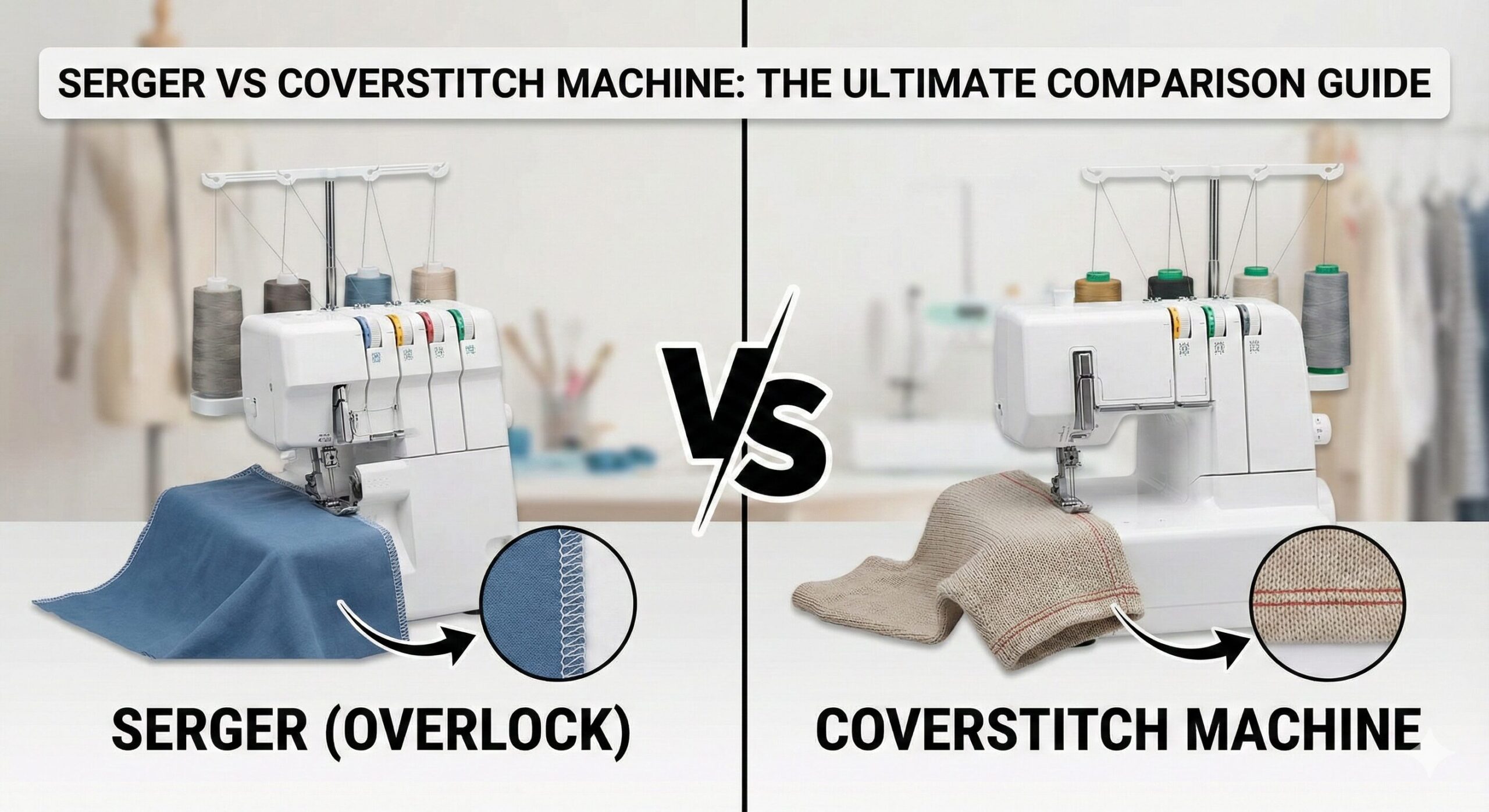
At first glance, these machines look remarkably similar. They both use multiple spools of thread (often cones), they both have complex looper systems, and they both terrify beginners who haven’t yet mastered sewing machine setup. However, they serve two completely different primary functions. One is a master of construction and edge finishing, while the other is the undisputed king of professional hemming.
Whether you are looking to upgrade your atelier or just trying to understand what tools you need to sew perfect activewear, this guide breaks down the mechanics, use-cases, and pros and cons of both machines. We will help you decide which investment will elevate your sewing from “homemade” to “handmade.”
At a Glance: The Technical Differences
Before we dive deep into the mechanics, let’s look at the high-level differences. While they share some DNA—like differential feed systems to handle stretchy fabrics—their roles in your sewing room are distinct.
| Feature | Serger (Overlocker) | Coverstitch Machine |
|---|---|---|
| Primary Function | Seaming, trimming, and finishing raw edges simultaneously. | Hemming knit fabrics and topstitching without cutting. |
| Cutting Knife | Yes. It cuts the fabric edge as it sews. | No. It does not have a blade. |
| Loopers | Two loopers (Upper & Lower) wrap thread around the edge. | One looper (Chain) creates a chain stitch on the back. |
| Seam Appearance | Encased edge (overlock) or rolled hem. | Two parallel straight stitches on top, grid/chain on bottom. |
| Best For | Construction of garments, preventing fraying. | Professional hems on t-shirts, leggings, and swimwear. |
| Reverse Stitching | No. | No. |
The Serger (Overlocker): The Construction Workhorse
To understand the comparison, we must first define what is a serger sewing machine. In many parts of the world, it is known as an “overlocker.” This name perfectly describes its job: it locks loops of thread over the edge of the fabric.
How It Works
A serger typically uses 3 or 4 threads. The magic lies in the blade. As you feed fabric through, a knife trims off the raw, fraying edge just millimeters before the needles and loopers encase that fresh edge in thread. This creates a clean, durable finish that stops fabric from unraveling.
Key Features & Uses
- Construction: A 4-thread overlock stitch is strong and flexible, making it ideal for sewing seams on knit fabrics like jersey and fleece.
- Differential Feed: This feature controls two sets of feed dogs moving at different speeds. It prevents stretchy fabrics from waving out of shape or lightweight fabrics from puckering.
- Rolled Hems: By removing one needle and adjusting tension, a serger can create a beautiful, narrow rolled hem on napkins or chiffon skirts.
- Speed: Sergers are incredibly fast, often stitching up to 1,300 stitches per minute, significantly faster than standard sewing machine vs hand sewing speeds.

Top Rated Entry-Level Serger: Brother 1034D
Known for being beginner-friendly and reliable for basic overlocking tasks.
Check Price on AmazonThe Coverstitch Machine: The Hemming Specialist
If the serger is the muscle, the coverstitch is the aesthetic finish. Have you ever looked at the hem of your store-bought T-shirt? On the outside, you see two parallel rows of straight stitching. On the inside, there is a complex loop structure that looks like a serger stitch but isn’t on the edge. That is a coverstitch.
How It Works
A coverstitch machine does not have a knife. This is the critical difference. Because it doesn’t cut, you can sew in the middle of a fabric piece, not just on the edge. It typically uses 1, 2, or 3 needles and one looper underneath.
Key Features & Uses
- Professional Hemming: It allows you to turn up a hem and stitch it down while maintaining the fabric’s stretch. A standard sewing machine’s straight stitch will pop when a T-shirt is pulled; a coverstitch stretches with the wearer.
- Chain Stitching: By using a single needle and the looper, you can create a durable chain stitch, which is great for fitting adjustments (basting) or decorative effects.
- Necklines and Bindings: With the right attachments, a coverstitch machine applies binding to necklines and armholes in one pass, mimicking high-end activewear.
- Decorative Topstitching: Since it doesn’t cut, you can use it to add decorative seams anywhere on a garment.
While a coverstitch machine is less versatile than a serger for construction, it is indispensable for finishing. Without it, hemming knits requires a twin needle on a regular machine, which is often fiddly and prone to sewing machine needle problems like tunneling.

Best Value Coverstitch: Brother 2340CV
Perfect for achieving that professional twin-needle look on stretchy hems.
Check Price on AmazonComparison: Functionality and Performance
1. Handling Knit Fabrics
Both machines excel here. The differential feed mechanism on both allows you to adjust how fabric is fed under the presser foot. This is crucial for knits. However, the application differs. You use the serger to assemble the knit pieces (side seams, shoulder seams), and you use the coverstitch to hem the sleeves and bottom.
2. Ease of Use and Threading
Let’s be honest: threading loopers is intimidating.
Sergers: Threading a serger involves a specific order (usually upper looper, lower looper, right needle, left needle). Get it wrong, and you will spend hours reading guides on sewing machine troubleshooting.
Coverstitch: While still involving a looper, the coverstitch is generally slightly easier to thread than a serger because there is only one looper and it doesn’t cross over an upper looper. However, releasing the fabric at the end of a seam on a coverstitch machine requires a specific technique (pulling threads forward or backward depending on the model) that takes practice.
3. Can One Do the Job of the Other?
This is the most common question.
Can a serger do a coverstitch? No. Standard sergers cannot do a coverstitch because of the blade and looper configuration.
Can a coverstitch do serging? No. It cannot cut the fabric, and it doesn’t wrap thread around the edge; it stitches over the fabric.
Note on Hybrid Machines: There are machines that do both (Serger/Coverstitch Combos). While they save space, switching between modes can be time-consuming and tedious. If you have the space (perhaps a dedicated spot on your sewing table), having two separate machines is often preferred by professionals to keep workflow smooth.
Pros and Cons
- Cuts and finishes edges in one step (huge time saver).
- Creates incredibly durable seams for activewear.
- Prevents fraying better than any zigzag stitch.
- Capable of beautiful rolled hems for lightweight fabrics.
- Cannot sew a hem in the middle of fabric (only on edges).
- Threading can be complex and frustrating.
- Mistakes mean cut fabric—there is no “undo” button once the knife slices.
- Produces professional, stretchy hems that look store-bought.
- Does not cut fabric, allowing for decorative interior stitching.
- Large workspace to the right of the needle (unlike sergers).
- Great for attaching elastic and bindings.
- Limited versatility—it really just hems and topstitches.
- Does not finish raw edges against fraying as securely as a serger.
- Can skip stitches on bulky seams (crossing side seams).
Essential Accessories for Your Setup
Regardless of which machine you choose, you will need the right tools to support it. Sergers and coverstitch machines consume thread rapidly, so standard spools won’t last long. You will need thread cones.
- Thread: Use high-quality polyester or best cotton threads to minimize lint buildup in the complex looper mechanisms.
- Fabric Control: Since you cannot pin directly in the path of a serger knife (it will destroy the blade!), invest in sewing clips. They hold layers firmly without risking your machine.
- Cutting Tools: Precise cutting is vital before the fabric even hits the machine. Learn how to use a rotary cutter safely and use a self-healing quilting cutting mat to prepare your pattern pieces accurately.
- Needles: Ensure you are using the correct system. Are sewing machine needles universal? Not always. Sergers often use ELx705 needles which differ from standard home machine needles. Check your manual.
Frequently Asked Questions
Do I need a serger if I have a sewing machine?
Technically, no. You can finish edges with a zigzag stitch. However, a serger provides a much stronger, professional, and cleaner finish, especially for knit fabrics. It is a massive upgrade in speed and quality.
Can I use a twin needle instead of a coverstitch machine?
Yes, a twin needle on a standard sewing machine mimics the look of a coverstitch. However, it is often less stretchy and prone to “tunneling” (where the fabric ridges up between stitches). A coverstitch machine solves these issues.
Is a combo serger/coverstitch machine worth it?
Combo machines save space and money compared to buying two separate units. However, converting between modes can be tedious, taking 5-10 minutes to re-thread and change plates. If you switch tasks often, two separate machines are better.
Why is my serger jamming?
Jamming is usually caused by incorrect threading order, mismatched thread tensions, or a dull knife. Ensure your thread is seated deeply in the tension discs and check our guide on why your sewing machine is jamming for more tips.
Final Verdict: Which Machine Should You Buy First?
If you have to choose just one, the answer depends on where you are in your sewing journey.
Buy a SERGER first if:
- You sew a lot of garments and want the insides to look as good as the outsides.
- You work with knits and are tired of seams popping.
- You need speed and efficiency in assembling clothes.
A serger is generally considered the second most important machine in a sewing room, right after your primary mechanical or computerized sewing machine.
Buy a COVERSTITCH machine if:
- You already own a serger and want to level up your hemming game.
- You sell handmade clothes and need that “factory finish” on hems.
- You sew strictly activewear, swimwear, or lingerie where elasticity is paramount.
Ultimately, both machines are powerful allies. Start with a serger to master construction, and add a coverstitch later when you demand perfection in your finishing touches.
Ready to upgrade your sewing studio?
Explore Top Rated Machines on Amazon