Janome HD1000 Review: A Heavy-Duty Survivor in a Plastic World
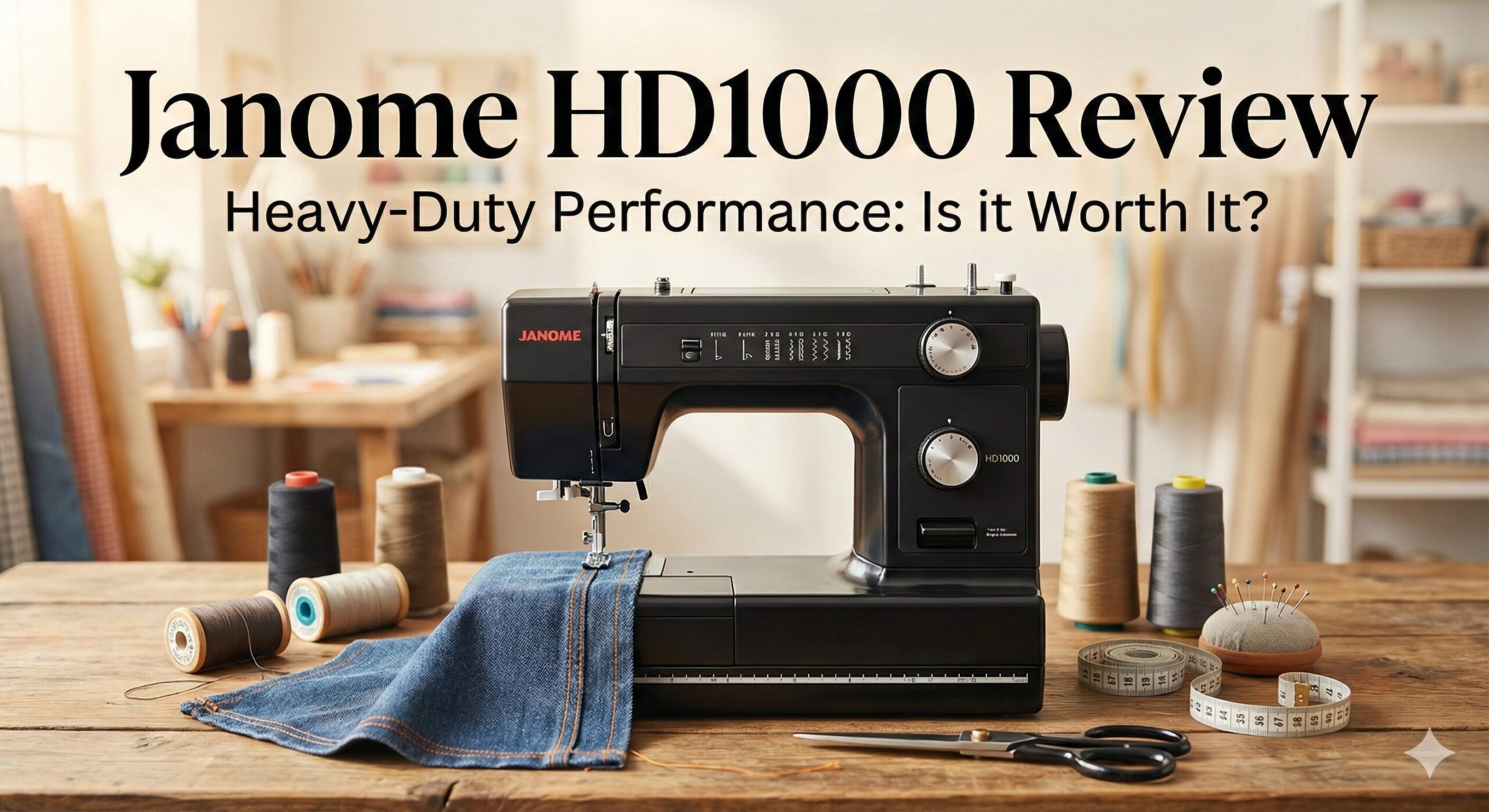
In a market flooded with computerized gadgets that promise to do everything but make your coffee, the Janome HD1000 stands apart as a defiant traditionalist. It doesn’t have an LCD screen. It doesn’t beep at you when you make a mistake. It doesn’t have 500 decorative stitches you’ll never use. Instead, it offers something that has become increasingly rare in modern appliances: cast aluminum construction and unrelenting mechanical reliability.
For sewists who are tired of plastic machines vibrating across their sewing tables or jamming on the first layer of denim, the HD1000 promises a return to basics. But is “basic” enough for the modern crafter? In this comprehensive review, we put the Janome HD1000 through its paces—testing its piercing power, stitch consistency, and durability—to see if this industrial-style home machine is truly the workhorse it claims to be.
Product Overview: The “Black Sheep” of the Plastic Age
The Janome HD1000 is often grouped with “Heavy Duty” machines, a category dominated by the Singer Heavy Duty series. However, where Singer uses a grey plastic shell to look industrial, the Janome HD1000 actually feels industrial. The body is made of cast aluminum, giving it significant weight and rigidity.
It is a purely mechanical sewing machine. This simplicity is its greatest strength. With fewer electronic components to fail, it is designed to last for decades rather than years. It features 14 built-in stitches, a 4-step buttonhole, and a front-loading bobbin system that old-school sewists swear by for tension control.

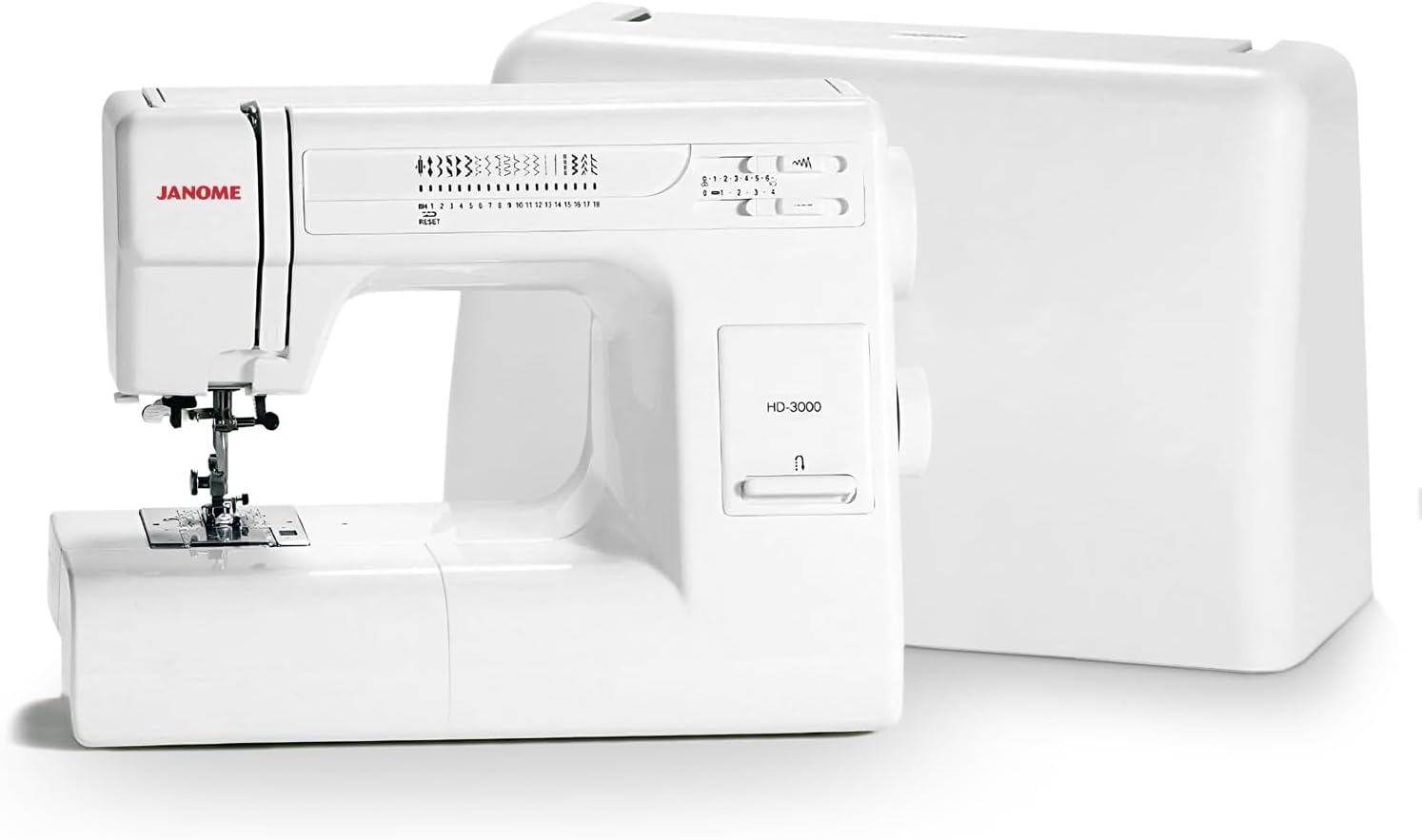
Janome HD1000 Mechanical Sewing Machine
Best For: Heavy fabrics, beginners wanting simplicity, and sewists tired of plastic gears.
Rating: 4.7 / 5 Stars
Check Price & Availability on AmazonIn-Depth Review: Features & Build Quality
To understand the value of the HD1000, you have to look under the hood. Most machines in the $300 range rely on an internal metal frame wrapped in a plastic clamshell. The HD1000 eliminates the middleman.
1. The Cast Aluminum Body
This is the headline feature. The exterior you touch is the same metal that holds the motor and gears. This construction minimizes vibration. When you are sewing at high speeds or punching through thick leather, the machine stays planted. It doesn’t “walk” or rattle, which leads to superior stitch precision.
2. 14 Essential Stitches
If you are coming from a computerized sewing machine with 100+ stitches, 14 might seem limiting. However, Janome has curated the essentials:
- Straight Stitch: Adjustable length for construction and topstitching.
- Zigzag: Adjustable width for finishing edges.
- Three-Step Zigzag: Crucial for mending and sewing elastic.
- Blind Hem: For professional trouser hems.
- Stretch Stitches: For sewing knits without popping seams.
Switching stitches is done via a large, tactile dial on the front. It clicks satisfyingly into place—no touchscreens to freeze up here.
3. Front-Loading Bobbin System
The HD1000 uses a classic vertical oscillating hook bobbin system (front-loading). While modern machines often use top-loading “drop-in” bobbins for ease of use, the front-loading style is preferred by many heavy-duty users.
Why? Because it is often more tolerant of different thread weights and easier to adjust the bobbin tension for heavy thread work. However, it does require you to remove the accessory tray to change the bobbin, which some find inconvenient. If you are prone to jams, check our guide on why your sewing machine is jamming—often it’s just a mis-threaded bobbin case.
4. The 1.0 Amp Motor
Torque is king when it comes to heavy fabrics. The Janome HD1000 sports a 1.0-amp motor (roughly equivalent to the Janome HD-3000). While it doesn’t have the blistering speed of an industrial machine, it provides consistent piercing power at slow speeds, which is vital when navigating thick seams on jeans.
Performance Test: Can It Handle the Tough Stuff?
We tested the Janome HD1000 on a variety of materials to see if the “Heavy Duty” label is earned or just marketing fluff.
The Denim Test
Hemming jeans is the litmus test for any HD machine. We stacked four layers of 14oz denim. The HD1000 pierced through without hesitation. We increased it to eight layers (simulating a flat-felled seam intersection). The motor slowed slightly but did not stall.
Pro Tip: Success here depends on your needle. You must use a fresh Denim needle (size 100/16 or 110/18). If you use a universal needle, you will encounter sewing machine needle problems like breakage or skipped stitches.
Leather and Canvas
We sewed through two layers of soft garment leather using a Teflon foot (Ultra Glide foot) and a leather needle. The stitch quality was excellent. For heavy canvas (like duck cloth for tote bags), the machine fed the fabric evenly.
Note: While capable, this is still a home machine. It is not designed for saddle leather or extremely thick veggie-tan leather. For that, you need an industrial walking foot machine.
Delicate Fabrics & Knits
Heavy-duty machines often struggle with finesse. However, the HD1000 handled cotton voile decently, provided we adjusted the tension. Sewing knits was manageable using the stretch stitches, though the lack of adjustable presser foot pressure (a feature found on the HD3000) means you have to be careful not to stretch the fabric as you sew.
Pros & Cons of the Janome HD1000
What We Love (Pros)
- Durability: The cast aluminum body is built to last a lifetime.
- Simplicity: Great setup for beginners who don’t want to navigate menus.
- Piercing Power: Handles denim and canvas better than most plastic machines.
- Needle Threader: Built-in automatic threader saves eye strain.
- Free Arm: The storage case slides off for sewing cuffs and sleeves.
- Drop Feed: Feed dogs can be lowered for free-motion quilting or darning.
What Could Be Better (Cons)
- Front-Loading Bobbin: Harder to access than top-loading systems; requires removing the accessory tray.
- 4-Step Buttonhole: More tedious than the 1-step automatic buttonholes found on the Brother CS7000X.
- Noise: Mechanical oscillating hooks are generally louder than rotary hooks.
- No Pressure Adjustment: Presser foot pressure is fixed, which can be tricky for very thin or very stretchy fabrics.
Comparison: Janome HD1000 vs. The Competition
The HD1000 sits in a competitive bracket. Here is how it compares to its big brother and its main rival.
Janome HD1000 vs. Janome HD3000
This is the most common debate. The Janome HD3000 is the upgraded version.
Differences: The HD3000 adds a top-loading bobbin (jam-proof), a 1-step buttonhole, adjustable presser foot pressure, and 4 extra stitches. It also has a built-in stitch guide under the lid.
Verdict: If you can afford the extra $100-$150, the HD3000 is objectively better due to the foot pressure adjustment and ease of use. However, the HD1000 shares the same motor and build quality for a lower price.
Janome HD1000 vs. Singer Heavy Duty 4423
The Singer 4423 is faster (1,100 stitches per minute) and significantly cheaper. However, the internal build quality of the Janome is superior. Singer uses more plastic components internally, which can lead to timing issues over time. The Janome HD1000 runs smoother and has better tension control out of the box. If you want a machine for a year, buy the Singer. If you want a machine for a decade, buy the Janome.
Janome HD1000 vs. Brother ST371HD
The Brother ST371HD offers more stitches (37) and is easier for beginners due to the top-loading bobbin. However, like the Singer, it lacks the full aluminum body of the Janome. For pure heavy-duty work, the Janome wins. For versatility and decorative sewing, the Brother wins.
| Feature | Janome HD1000 | Janome HD3000 | Singer HD 4423 |
|---|---|---|---|
| Body Material | Cast Aluminum | Aluminum/Plastic | Plastic (Metal Frame) |
| Bobbin | Front-Load | Top-Load | Top-Load |
| Stitches | 14 | 18 | 23 |
| Buttonhole | 4-Step | 1-Step | 1-Step |
| Foot Pressure | Fixed | Adjustable | Adjustable |
Maintenance and Accessories
One of the joys of a mechanical machine is that you can maintain it yourself. Unlike computerized models that need a technician, the HD1000 just needs oil.
- Oiling: Because it has an oscillating hook, you need to put a drop of oil on the bobbin race every few projects. This keeps it quiet and smooth. See our guide on common sewing machine problems and fixes for oiling tips.
- Needles: Stock up on heavy-duty needles. Are sewing machine needles universal? Yes, but size matters. Use size 16 or 18 for heavy canvas.
- Thread: Don’t use cheap thread in a nice machine. Use quality cotton threads or heavy-duty polyester for upholstery.
- Clips: When sewing thick layers like vinyl where pins leave holes, use the best sewing clips to hold pieces together.
Frequently Asked Questions
Is the Janome HD1000 good for beginners?
Yes, it is excellent for beginners who want to learn the mechanics of sewing. The lack of complex menus allows you to focus on fabric handling. However, the front-loading bobbin has a slightly steeper learning curve than a top-loading one.
Can the Janome HD1000 sew leather?
It can sew garment-weight leather (like lambskin) and vinyl easily, especially if you use a Teflon foot. It is not suitable for thick saddle leather or holsters; for that, you need an industrial machine.
Does it come with a case?
Yes, the Janome HD1000 typically comes with a hard shell cover, which is great for protecting the machine from dust and for travel to sewing classes.
What is the difference between the HD1000 and the Black Edition?
The differences are primarily cosmetic. The Black Edition (BE) features a stylish black finish. Occasionally, the Black Edition is sold with a “bonus bundle” of accessories like a walking foot, so checking the listing details is important.
Does it have a needle up/down button?
No, since it is a purely mechanical machine, it does not have programmable needle positioning. You must turn the handwheel to raise or lower the needle.
Is the Janome HD1000 a low shank machine?
Yes, it uses standard low-shank presser feet, making it easy to find affordable compatible accessories and feet.
Final Verdict: Should You Buy the Janome HD1000?
The Janome HD1000 is a refreshing reminder that newer isn’t always better. By sticking to a cast aluminum body and mechanical operation, Janome has created a machine that feels substantial, reliable, and powerful. It doesn’t try to be a computer; it tries to be a sewing machine, and it succeeds brilliantly.
If you are looking for bells and whistles, look at the Janome Loft 100. But if you want a machine that can hem your jeans, repair your canvas tent, and still be working perfectly when you pass it down to your kids, the HD1000 is the machine for you. It is a solid investment in your creative future.
Our Advice: If you can live without the one-step buttonhole, save the money and get the HD1000 over the HD3000. It’s the best value heavy-duty machine on the market.