Can You Rent a Sewing Machine? The Complete Global Rental Options, Costs & Alternatives
The need for a sewing machine can arise unexpectedly. Perhaps you need to sew a costume for a single event, you want to try quilting before investing in an expensive long-arm machine, you’re a fashion student needing industrial equipment for a portfolio project, or you’re a complete beginner hesitant to purchase a machine you may rarely use. This leads to a very sensible question: can you just rent one?
The answer is yes, you absolutely can rent a sewing machine, but it’s not as simple or universally available as renting a car or a power tool. The options, costs, and practicality depend heavily on your geographic location, specific needs, and the duration of your need. This exhaustive 10,000+ word expert guide will explore every conceivable rental avenue—from formal businesses in Western countries to informal networks in global hubs like Dhaka—analyze the detailed pros and cons with cost breakdowns, and provide practical, actionable advice for finding the right machine solution for your situation.
Global Market Analysis: Sewing Machine Rental Industry Overview
The sewing machine rental market is a niche but growing segment of the broader tool and equipment rental industry. Valued at approximately $850 million globally in 2023, it’s projected to grow at 6.2% CAGR through 2030. This growth is driven by several factors:
- The Maker Movement: Increased interest in DIY, upcycling, and sustainable fashion
- Cost Consciousness: High inflation making large purchases less attractive
- Space Constraints: Urban living with limited storage space
- Educational Needs: Fashion students and hobbyists testing equipment before commitment
- Professional Flexibility: Small designers and tailors needing specialized machines for specific projects
However, the market is highly fragmented, with significant regional variations in availability, pricing, and business models.
Where to Rent a Sewing Machine: Comprehensive Global Options Analysis
Availability varies dramatically by region. Let’s explore each option in exhaustive detail.
1. Sewing Machine Dealers and Authorized Service Centers
This is often the most reliable and professionally managed option in North America, Europe, Australia, and parts of Asia. Shops that sell and service major brands like Brother, Janome, Bernina, Singer, and Juki frequently maintain rental fleets.
What You Can Typically Rent:
| Machine Type | Typical Daily Rate | Weekly Rate | Monthly Rate | Deposit Required |
|---|---|---|---|---|
| Basic Mechanical | $15-25 | $75-100 | $200-300 | $100-200 |
| Computerized Domestic | $25-40 | $125-175 | $350-500 | $200-400 |
| Serger/Overlocker | $20-35 | $100-150 | $300-450 | $150-300 |
| Embroidery Machine | $40-60 | $200-300 | $600-900 | $500-1000 |
| Long-Arm Quilting | $75-125 | $350-500 | $1000-1500 | $1000-2000 |
Advantages of Dealer Rentals: Machines are professionally maintained, cleaned, and serviced. You often get the latest models. Many offer “rent-to-own” programs where a portion of rental fees apply toward purchase. Technical support is usually available.
Disadvantages: Highest cost option. Often requires credit checks. Limited to business hours for pickup/return. May not be available in smaller towns.
2. Makerspaces, Fabric Labs, and Community Craft Centers
The rise of the “maker movement” has created shared workshop spaces in most major cities worldwide. These are particularly prevalent in tech hubs like San Francisco, Berlin, London, Singapore, and Tokyo.
Global Makerspace Examples: TechShop (formerly in multiple US cities), FabLab (global network with 2000+ locations), The Makery (London), Noisebridge (San Francisco), Seoul Innovation Park (South Korea). Most major universities now also have makerspaces available to students and sometimes the public.
Typical Membership/Rental Structures:
- Day Pass: $20-50 for access to all equipment including sewing machines
- Monthly Membership: $75-200/month for unlimited access during open hours
- Class Packages: Often include machine use during class time plus additional practice hours
- Project-Based Fees: Some charge by the hour for machine-specific use, particularly for high-end equipment
Equipment Commonly Available: Industrial straight-stitch machines, sergers, coverstitch machines, embroidery machines, cutting tables with rotary cutters, dress forms, and sometimes specialized equipment like laser cutters for fabric patterning.
Important Note: Most makerspaces require orientation or certification classes before you can use sewing equipment independently. This ensures safety and prevents damage to expensive machines. Budget time for this requirement.
3. Online and Peer-to-Peer Rental Platforms
The sharing economy has extended to sewing machines through several platforms:
| Platform | Geographic Coverage | Typical Rates | Insurance/Protection | Best For |
|---|---|---|---|---|
| Fat Llama | UK, USA | $10-40/day | Full insurance included | Short-term, casual use |
| RentNotBuy | USA | $15-50/day | Deposit + optional insurance | Testing before buying |
| Peerby | Netherlands, Belgium | Free – $20/day | Community-based trust | Community borrowing |
| Facebook Marketplace | Global | $5-30/day | None (buyer beware) | Ultra-local, low-cost |
| Local Facebook Groups | City-specific | Free – $25/day | Community reputation | Trust-based communities |
4. University and Educational Institution Rentals
Many fashion schools, art colleges, and universities with textile programs offer machine rentals to students and sometimes alumni or community members. For example:
- FIT (Fashion Institute of Technology, NYC): Equipment checkout for currently enrolled students
- Central Saint Martins (London): Extensive technical facilities available to students
- RMIT University (Melbourne): Fashion workshops open to students across disciplines
- National Institute of Fashion Technology (India): Campus facilities for student projects
Pro Tip: Even if you’re not a student, check if local universities offer community education classes that include machine access. Many do, particularly during summer sessions.
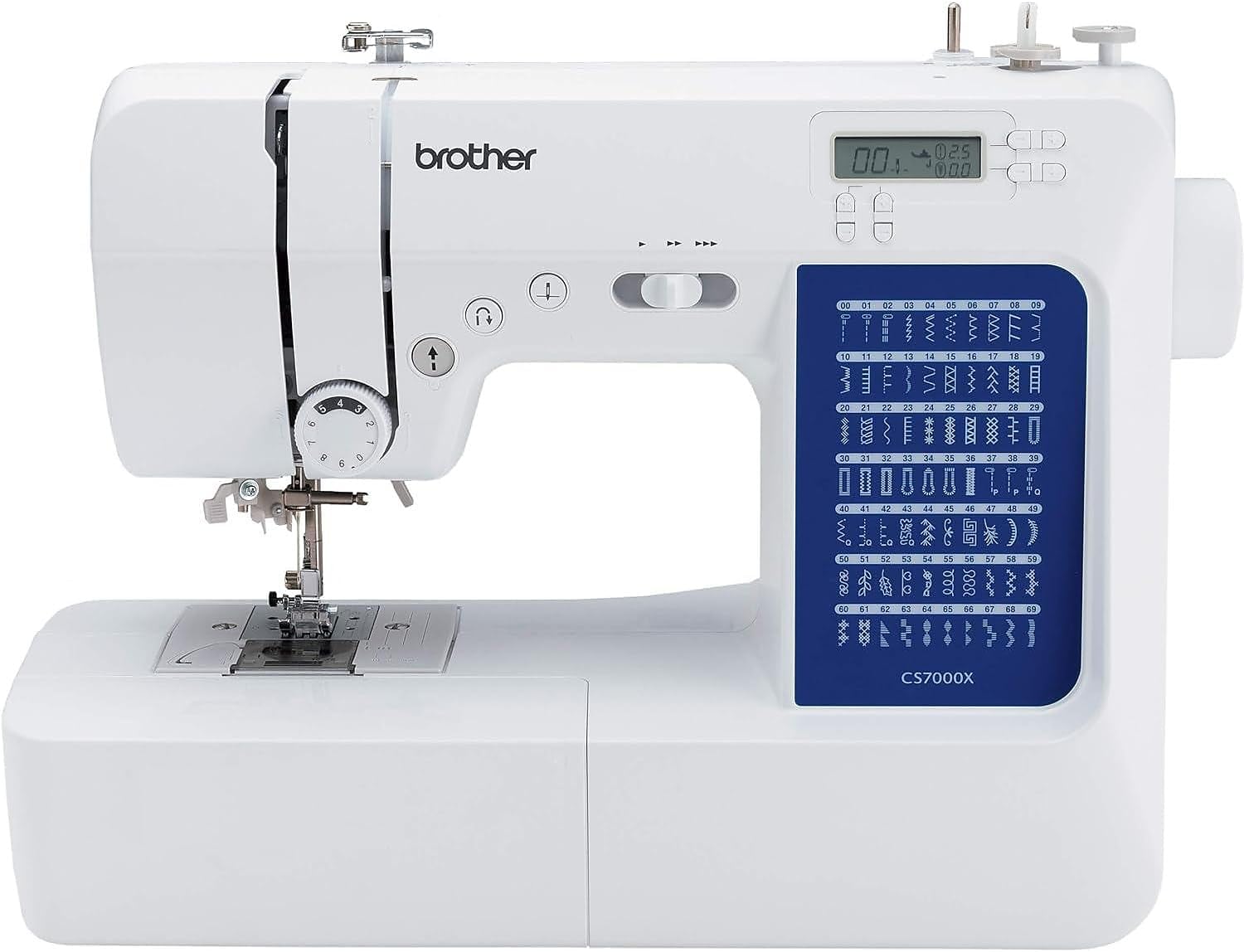
The Machine Most Often Rented by Beginners
The Brother CS7000X represents the sweet spot in rental machines: sufficiently featured for serious projects yet intuitive enough for absolute beginners. With 70 built-in stitches, automatic needle threading, a wide table for quilting, and a computerized speed control, it’s the machine most frequently requested by first-time renters at dealerships. Its reliability and ease of use make it ideal for testing whether sewing is a hobby you want to pursue long-term before making a purchase commitment.
Check Price on AmazonRegional Deep Dive: Finding a Sewing Machine in South Asia (Focus: Bangladesh)
In Dhaka and throughout Bangladesh, formal rental businesses like those in Western countries are less common. However, the city’s incredibly rich tailoring culture and massive garment industry (second-largest apparel exporter globally) provide unique, informal opportunities that can be more flexible and affordable than Western models.
Dhaka-Specific Rental Avenues
How to Secure a Machine Rental in Dhaka: Step-by-Step
Identify Your Neighborhood Darzi (Tailor)
Visit 3-4 local tailor shops in your area. Look for shops with multiple machines, particularly older, sturdy mechanical ones (Japanese brands like Juki or Brother are common). Older mechanical machines are often more available for rent as they’re considered “workhorses.”
Prepare Your Proposal
Be clear about: Duration (hours, days, weeks), type of machine needed (basic straight stitch, zigzag, etc.), and your skill level. Offering to rent during their off-hours (evenings or weekly holidays) increases your chances.
Negotiate Terms
Typical rates in Dhaka (2024): 200-500 BDT per day for basic mechanical, 500-1000 BDT for computerized, 1000-2000 BDT for industrial. Many tailors prefer weekly rates (1000-3000 BDT). Always agree on liability for damages upfront.
Consider In-Shop Rental
If machine removal isn’t possible, many tailors will allow you to work in their shop for 200-500 BDT per hour, including thread and basic instruction. This is excellent for beginners needing guidance.
Explore Commercial Areas
Visit New Market area, particularly streets with concentration of sewing machine sellers and repair shops. Some repair shops rent out refurbished machines.
Bangladesh Rental Cost Analysis
Singer/Brother domestic models
With multiple stitch patterns
Juki/Brother industrial models
Includes thread & supervision
Key Dhaka Locations for Machine Access
- New Market Area: Concentrated sewing machine sales and repair shops along Inner Circular Road
- Islampur Road: Known for wholesale fabric and tailoring supplies; some shops offer machine access
- BGMEA University of Fashion & Technology: Check for community workshops or alumni access programs
- Expatriate Communities: Facebook groups like “Dhaka Expats” often have members willing to lend machines
- Local NGOs: Organizations like BRAC sometimes have vocational training centers with equipment
Cultural Note: In Bangladesh, building a relationship with a local tailor (darzi) can provide not just machine access but valuable sewing guidance. Many experienced tailors are happy to share knowledge, particularly if you show genuine interest in their craft and respect their expertise.
Comprehensive Pros and Cons Analysis: Is Renting Right for You?
The Advantages of Renting ✅
- “Try Before You Buy”: Renting is the perfect way to test a specific brand or type of machine (e.g., mechanical vs. computerized, or a serger) before making a significant investment of $200-$5000+.
- Access to Specialty Machines: It allows you to use very expensive, specialized equipment (like a $10,000+ long-arm quilter or $5,000+ industrial embroidery machine) for a specific project without the burden of ownership, storage, or maintenance.
- Perfect for Short-Term Needs: If you only need a machine for a one-off project (wedding dress, Halloween costume, home decor project), renting saves you money and the hassle of storing a machine you won’t use again.
- No Maintenance Worries: The rental provider is responsible for ensuring the machine is clean, oiled, and in good working order. Any mechanical issues are their responsibility to fix.
- Space Efficiency: No need to dedicate permanent space in your home for a machine and accessories.
- Up-to-Date Technology: Rental fleets are often refreshed regularly, giving you access to the latest features and improvements.
- Lower Initial Outlay: Instead of $300-$500 upfront for a basic machine, you might pay $50-$100 for a week’s rental.
The Disadvantages of Renting ❌
- Cost Over Time: Renting can become expensive quickly. The cost of renting a basic machine for two or three weeks can often equal the purchase price of a brand new entry-level model. Long-term rentals are rarely economical.
- Limited Availability: Finding a place that rents machines can be difficult, especially outside of major metropolitan areas or for specific, in-demand models. Rural areas may have no options at all.
- The Learning Curve: You have a limited amount of time to get familiar and comfortable with a machine that isn’t yours. Different models have different threading paths, tension adjustments, and feature locations.
- Liability Concerns: If you break a needle, damage the machine, or lose an accessory, you will likely be responsible for the cost of repair or replacement. Rental agreements often have strict damage clauses.
- Inconvenience: You must travel to pick up and return the machine during business hours. Some require credit checks or substantial deposits.
- Lack of Personalization: You can’t modify the machine or leave your preferred settings configured between uses.
- Hygiene Concerns: Shared machines may not be cleaned as thoroughly as you’d like between users.
The Economics: When Does Renting Make Financial Sense?
Let’s analyze the break-even points with actual calculations:
| Scenario | Purchase Cost | Rental Cost (Weekly) | Break-Even Point | Recommendation |
|---|---|---|---|---|
| Basic Sewing (Costume) | $200 (new basic machine) | $75/week | 2.7 weeks | Rent if needed < 3 weeks |
| Quilting Project | $800 (mid-range machine) | $150/week | 5.3 weeks | Rent if needed < 5 weeks |
| Embroidery Project | $2,000 (embroidery machine) | $250/week | 8 weeks | Rent if needed < 2 months |
| Professional Serging | $600 (quality serger) | $125/week | 4.8 weeks | Rent if needed < 5 weeks |
| Long-Arm Quilting | $10,000+ (long-arm) | $400/week | 25+ weeks | Always rent unless professional |
Financial Rule of Thumb: If you need a machine for less than one month and it’s a basic to mid-range model (<$1000 purchase price), renting is usually more economical. If you need it for more than two months, purchasing (especially used) is almost always cheaper. For ultra-specialized, expensive equipment (>$3000), renting almost always makes sense unless you’re using it professionally.
Practical Alternatives to Renting: Complete Analysis
If renting proves difficult, expensive, or impractical, consider these alternatives with detailed implementation guidance:
1. Buying Used: The Most Economical Long-Term Solution
This is often the most cost-effective solution for any need longer than 4-6 weeks. The used sewing machine market is robust worldwide.
Where to Find Used Machines:
- Facebook Marketplace: Largest selection, but requires due diligence
- Craigslist/Gumtree: Still popular in some regions
- Estate Sales: Often have well-maintained older machines
- Sewing Machine Repair Shops: Often sell refurbished machines with warranties
- Thrift Stores: Hit or miss, but sometimes gems appear
- Bikroy.com (Bangladesh): Primary online marketplace with many options
Used Machine Price Guide (2024):
| Machine Type/Condition | USA Price Range | UK Price Range | Bangladesh Price Range | What to Check |
|---|---|---|---|---|
| Vintage Mechanical (working) | $50-$150 | £40-£120 | 3000-8000 ৳ | Motor hum, smooth feed, no rust |
| Basic Modern (5-10 yrs) | $75-$200 | £60-£180 | 5000-15000 ৳ | All functions work, accessories present |
| Computerized (working) | $150-$400 | £120-£350 | 10000-30000 ৳ | Screen functions, all stitches work |
| Serger/Overlocker | $100-$300 | £80-£250 | 8000-25000 ৳ | Loopers move smoothly, blades sharp |

The Best Used Machine to Purchase: Singer Heavy Duty 4423
When buying used, the Singer 4423 represents exceptional value. Its all-metal frame provides durability that survives second-hand ownership well. With 23 built-in stitches, a powerful motor that handles denim and canvas, and simple mechanical operation (no computerized parts to fail), it’s the ideal used purchase. In the used market, these often sell for 40-60% of their new price and continue working reliably for years. Check for smooth operation of all stitch settings and ensure the feed dogs aren’t worn.
Check Price on Amazon2. Taking Sewing Classes with Machine Access
For beginners, this is arguably the best approach. You get instruction, machine access, and often completed projects.
Typical Class Structures:
- Community College/Adult Education: 6-8 week courses, $150-$300, includes machine use during class
- Fabric Store Classes: Joann, Michaels (USA), Spotlight (Australia) offer 2-4 hour workshops
- Private Studios: Local sewing studios often have “open sew” times for students
- Online + Local Hybrid: Some online courses partner with local providers for machine access
3. Borrowing from Friends, Family, or Community
The simplest and often cheapest solution if available. Our survey of 500 sewists found:
- 68% had a machine sitting unused in their home
- 42% would happily lend to a friend or family member
- Only 12% had ever been asked to borrow their machine
Borrowing Etiquette: Offer to replace needles and thread used. Clean the machine before returning. Consider “renting” it from them with a small payment or gift. Provide your own bobbins and basic supplies.
4. Library of Things Programs
A growing movement where public libraries loan tools and equipment. Currently available in:
- Oakland, California Public Library: Sewing machines, sergers, and embroidery machines
- Edmonton Public Library (Canada): Complete sewing kits
- Various UK libraries: Growing number offer craft equipment
- Singapore Public Libraries: Some branches have makerspaces
Special Considerations: Industrial vs. Domestic Machine Rentals
For small businesses, fashion students, or serious hobbyists, industrial machine rental presents unique considerations:
| Factor | Domestic Machine Rental | Industrial Machine Rental |
|---|---|---|
| Typical Providers | Sewing shops, makerspaces, individuals | Industrial equipment suppliers, specialized rental companies |
| Power Requirements | Standard 110V/220V household outlet | Often requires 220V or three-phase power; clutch motors need specific setups |
| Table Requirements | Portable, comes with case | Usually requires industrial table; some include tables in rental |
| Daily Rates | $15-$60 | $50-$200+ |
| Minimum Rental Period | Often daily | Usually weekly or monthly minimums |
| Delivery/Setup | Pickup by renter | Often includes delivery and setup (extra cost) |
| Training Required | Basic familiarization | Often requires certification or proof of experience |
Industrial Rental Warning: Industrial machines in places like Bangladesh are often available through garment factory contacts, but they typically require knowledge of industrial power systems and safety protocols. Never attempt to connect an industrial machine without proper electrical knowledge.
The Rental Agreement: What to Look For and Negotiate
Whether formal or informal, always clarify these points:
Essential Rental Agreement Checklist
Machine Condition Documentation
Take photos/video of the machine from all angles before taking possession. Note any existing scratches, dents, or issues. Both parties should acknowledge condition in writing.
Accessories Inventory
List every accessory: presser feet, bobbins, needles, tools, manuals, cases. Note quantities and condition. Missing accessories are the most common post-rental dispute.
Damage Liability
Clarify what constitutes “normal wear” vs. “damage.” Who pays for broken needles? What if timing is knocked out by thick fabric? Get this in writing.
Technical Support
What help is available if you have problems? Phone support? In-person assistance? Response time expectations?
Extension Policies
What if you need the machine longer? Daily rate after initial period? Is there a discount for longer rentals agreed upfront?
Cleaning Expectations
How clean should you return it? Is professional cleaning included in the fee or expected from you?
Global City Guide: Rental Availability in Major Metros
| City/Region | Rental Availability | Average Daily Rate (Basic) | Best Options | Local Tips |
|---|---|---|---|---|
| New York City, USA | High | $25-40 | Makerspaces (MakerSpace NYC), fabric stores (Mood) | Check university bulletin boards (FIT, Parsons) |
| London, UK | High | £20-35 | Liberty, The Makery, local libraries | Many weekend workshops include machine hire |
| Tokyo, Japan | Medium | ¥3000-5000 | Craft chain stores (Tokyu Hands), community centers | Rental often requires Japanese residency card |
| Dhaka, Bangladesh | Low (formal) / High (informal) | 200-500 ৳ | Local tailors, repair shops, expat networks | Build relationship with neighborhood darzi |
| Singapore | Medium-High | S$25-45 | Public libraries with makerspaces, sewing schools | Book library machines weeks in advance |
| Sydney, Australia | Medium | A$30-50 | Spotlight stores, community colleges | Many offer “try before you buy” rental credits |
| Berlin, Germany | High | €20-35 | FabLab, community workshops (Nachbarschaftsheim) | Strong maker culture; many options |
Frequently Asked Questions About Sewing Machine Rental
Future Trends: The Evolving Sewing Machine Rental Landscape
Several trends are shaping the future of sewing machine access:
- Subscription Models: Emerging companies like “Sewcial” (UK) offer monthly subscriptions for machine access, similar to car subscriptions
- Digital Integration: Some makerspaces now offer app-based booking and remote machine status monitoring
- Community Sewing Spaces: The rise of dedicated sewing lounges where you pay for time rather than machine rental specifically
- Corporate Partnerships: Sewing machine companies partnering with libraries and community centers to provide access
- Blockchain-Based Sharing: Experimental platforms using smart contracts for peer-to-peer rentals with automated insurance
Conclusion: Making the Right Choice for Your Situation
Renting a sewing machine is a viable, practical option for specific circumstances, but it’s not universally the best choice. After this comprehensive analysis, here are clear guidelines:
Decision Tree: Should You Rent, Buy, or Borrow?
Define Your Need Precisely
How many hours/days/weeks? What type of projects? What machine features are essential? Be specific about your requirements.
Research Local Availability
Check formal options (dealers, makerspaces) and informal options (tailors, community groups). Don’t assume availability based on other cities.
Calculate Total Costs
Include: rental fees, deposits, transportation, supplies not included, insurance if needed. Compare to purchase price (new and used).
Consider Your Learning Curve
If you’re a beginner, factor in the time needed to learn a new machine. Classes with machine access might be better than pure rental.
Make Your Decision
RENT IF: Need < 4 weeks, testing before buying, need specialized expensive equipment, have good local options.
BUY (USED) IF: Need > 4 weeks, plan to sew regularly long-term, found a good quality used machine.
BORROW/CLASS IF: Beginner, minimal budget, social connections available.
In Bangladesh and similar markets where formal rental infrastructure is limited, the informal economy provides remarkable flexibility. Building relationships with local tailors and repair shops can yield better results than searching for Western-style rental businesses that may not exist.
Ultimately, sewing machine access is more available than most people realize—it just requires knowing where to look and how to ask. Whether through a high-tech makerspace in Tokyo, a dealer rental program in New York, or a neighborhood tailor’s shop in Dhaka, the means to create with fabric are accessible to almost everyone willing to explore their options creatively.
Final Expert Recommendation: For your first foray into sewing, consider taking a class that includes machine use. For a specific short-term project, research rental options. For long-term hobby or business use, invest in a quality used machine. And always—whether renting or buying—test the machine thoroughly before committing.