Brother SE600 vs SE1900: The Ultimate Showdown
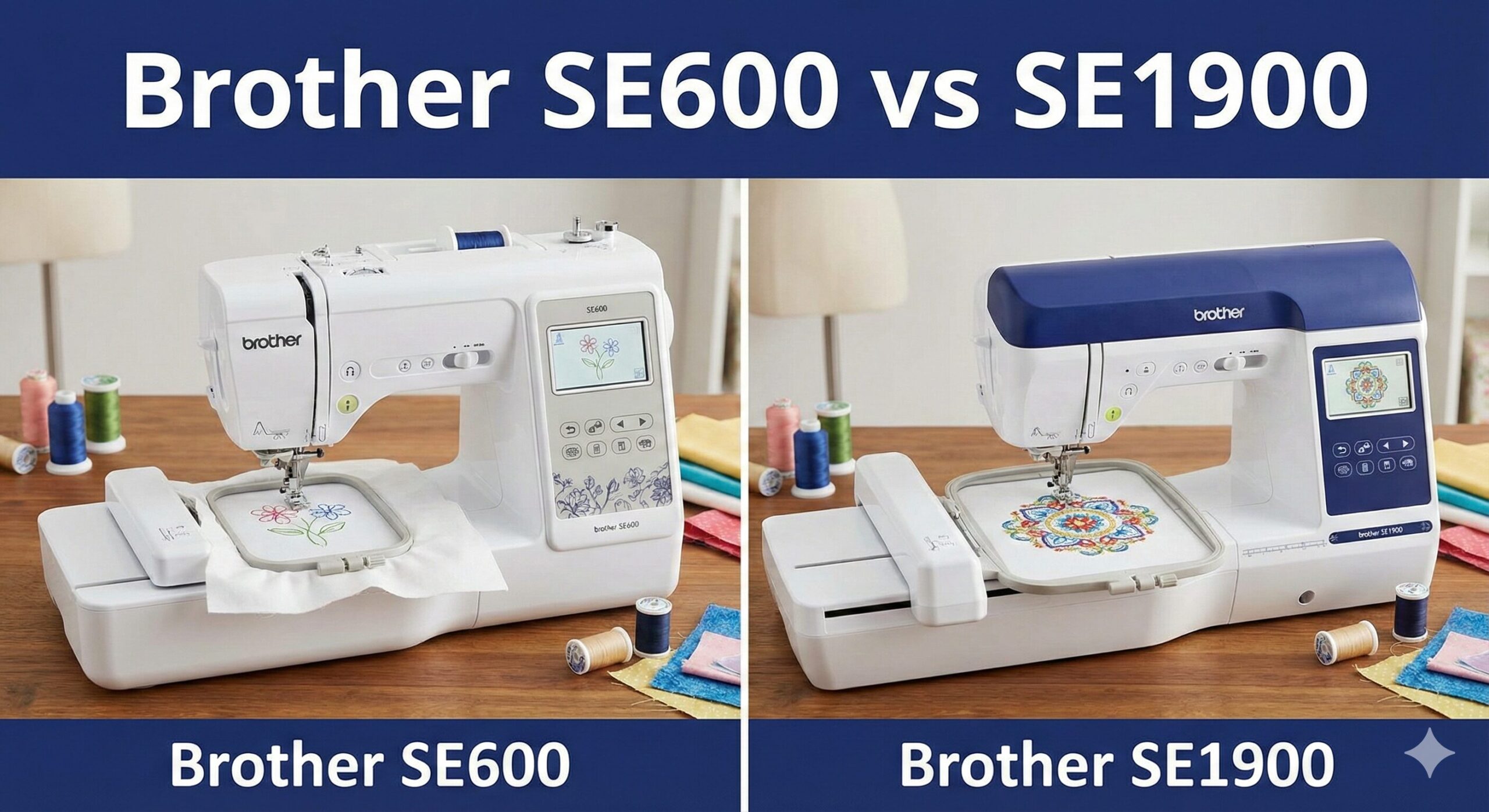
Is the massive price jump to the SE1900 actually justified, or is the SE600 the best budget king on the market? We break down the specs, hoops, and stitching quality.
If you are looking to enter the world of machine embroidery without giving up the functionality of a standard sewing machine, Brother is likely the first brand on your radar. They dominate the “combo machine” market for a reason: they are user-friendly, reliable, and packed with technology.
However, the dilemma is classic. You are likely staring at two specific models: the wildly popular, budget-friendly Brother SE600 and its bigger, beefier sibling, the Brother SE1900 (sometimes cross-shopped with the PE800, though that is embroidery-only).
The price difference between these two is significant—often double. Does the SE1900 offer double the value? Or is the SE600 enough for a hobbyist? In this comprehensive comparison, we will dissect the hoop sizes, stitch speeds, and essential features to help you decide which machine deserves a spot on your sewing table.
At a Glance: The Quick Comparison Table
Before we dive into the nitty-gritty, let’s look at the raw technical specifications side-by-side.
| Feature | Brother SE600 | Brother SE1900 |
|---|---|---|
| Type | Sewing & Embroidery Combo | Sewing & Embroidery Combo |
| Max Embroidery Area | 4″ x 4″ | 5″ x 7″ |
| Built-in Stitches | 103 | 240 |
| Embroidery Designs | 80 | 138 |
| Sewing Speed | 710 SPM | 850 SPM |
| Screen Size | 3.2″ Color Touchscreen | 3.2″ Color Touchscreen |
| Feed System | 7-Point Feed Dogs | Square Feed Drive System (SFDS) |
| My Custom Stitch | No | Yes |
| Price Tier | Budget / Entry-Level | Mid-Range / High-End |
The Main Event: Hoop Size (4×4 vs. 5×7)
Let’s not bury the lead here. The single most critical difference between the Brother SE600 and the SE1900 is the embroidery field size.
The SE600 Limitation
The SE600 comes with a 4×4 inch hoop. For beginners, this sounds sufficient. It is great for adding small logos to polo shirts, putting names on baby onesies, or making patches. However, you will hit a wall faster than you think.
If you want to embroider a large design on the back of a jacket, or a full-size name on a bath towel, 4×4 is simply too small. You would have to split the design into multiple parts and re-hoop the fabric, which is a nightmare for alignment. (If you are struggling with alignment, check our guide on troubleshooting common issues).
The SE1900 Advantage
The SE1900 boasts a 5×7 inch embroidery field. This may not sound like a huge numeric jump, but visually, it is massive. It allows for substantial floral arrangements, large monograms, and in-the-hoop (ITH) projects like zipper pouches that simply cannot fit on the SE600.
Winner: Brother SE1900. If budget allows, the 5×7 hoop is the #1 reason to upgrade.

Brother SE1900 Sewing and Embroidery Machine
The 5×7 hoop size opens up a world of creative possibilities that the smaller 4×4 machines just can’t match.
Check Price on AmazonSewing Capabilities: Stitches and Speed
Remember, these are “combo” machines. You aren’t just buying them to embroider; you want to sew garments, quilts, and home decor. How do they stack up as traditional sewing machines?
Brother SE600 Sewing Features
The SE600 is a capable computerized sewing machine. It features 103 built-in stitches, including essential utility stitches, decorative options, and 10 styles of one-step buttonholes. It includes a 7-point feed dog system which creates smooth fabric feeding.
For most intermediate sewers, this is plenty. It handles cotton, polyester, and basic knits well. However, if you are looking to sew thick quilts, you might need to investigate other intermediate machines or specialized heavy-duty options.
Brother SE1900 Sewing Features
The SE1900 takes it up a notch with 240 built-in stitches. While you might not use all of them, the variety of decorative stitches is stunning. More importantly, the SE1900 utilizes Brother’s Square Feed Drive System (SFDS).
The SFDS ensures that the feed dogs stay in contact with the fabric longer than a traditional oval motion. This results in superior stitch quality, especially on tricky fabrics like satin or heavy denim. It also features the “My Custom Stitch” feature, allowing you to design your own decorative stitches directly on the LCD screen.
The SE1900 also sews faster—up to 850 stitches per minute compared to the SE600’s 710. If you are piecing a large quilt, that speed difference adds up. Speaking of quilting, don’t forget to pair these machines with a high-quality rotary cutter for precise cuts.
Interface and Ease of Use
Both machines feature computerized interfaces with color LCD touchscreens. This is where you edit embroidery designs, change thread colors, and select sewing stitches.
Surprisingly, both machines share a very similar 3.2-inch screen size (on most iterations). The software interface is nearly identical, known for being incredibly intuitive. You can drag and drop designs, mirror image them, and rotate them by degree.
Both machines also feature:
- Automatic Needle Threader: A lever-action system that saves your eyes.
- Drop-in Top Bobbin: Jam-resistant and easy to monitor thread levels.
- USB Port: Essential for importing .PES embroidery files downloaded from the internet.
Because the interface is so similar, there is no steep learning curve if you upgrade from the SE600 to the SE1900 later. However, if you run into mechanical errors like the dreaded “E6”, check our guide on fixing Brother E6 errors.
Brother SE600: The Deep Dive
The Brother SE600 is the successor to the SE400, which was the best-selling machine in this category for a decade. It is designed for the hobbyist who wants to dabble in everything.
Pros
- Affordable: The best value entry point for embroidery.
- Compact: Easy to transport to classes or store in small spaces.
- User-Friendly: Excellent tutorials built-in.
- Versatile: A great sewing machine even without the embroidery unit.
Cons
- Small Hoop (4×4): severely limits design sizes.
- Slower Speed: Not ideal for production work.
- Throat Space: Tight fit for bulky quilting rolls.
Ideal For: Beginners, crafters with limited space, and those who primarily want a sewing machine but want the option to add a monogram occasionally.

Brother SE1900: The Deep Dive
The SE1900 is for the sewist who knows they love the craft and doesn’t want to be limited. It is often compared to the Brother CS7000X regarding reliability, but with added embroidery tech.
Pros
- 5×7 Hoop: Accommodates standard commercial design sizes.
- Smooth Feeding: The SFDS system handles layers better.
- Lighting: Better LED illumination over the needle area.
- Knee Lifter Compatible: (Check specific bundles) allows hands-free pivoting.
Cons
- Price: Significantly higher investment.
- Footprint: Takes up more desk space (check sewing tables for fit).
- Bobbin Size: Still uses standard bobbins, which run out fast on large designs.
Ideal For: Quilters who need throat space, small business owners making personalized gifts, and anyone who hates the phrase “I wish I had a bigger hoop.”
Essential Accessories for Both Machines
Regardless of which machine you choose, the “machine only” box is just the beginning. To get professional results, you need the right tools. Embroidery is 50% machine and 50% supplies.
1. Stabilizer and Thread
You cannot embroider without stabilizer. It supports the fabric to prevent puckering. You also need 60wt bobbin thread and 40wt embroidery thread. Don’t use standard cotton sewing thread for embroidery; it lacks the sheen and strength. Read our guide on the best threads to understand the difference.
2. Needles Matter
Embroidery needles have larger eyes to accommodate the friction of high-speed stitching. Using a universal needle often leads to shredded thread. If you are confused about types, see our article: Are sewing machine needles universal?
3. Scissors and Snips
You will need precise embroidery snips (often called “stork scissors”) to cut jump threads close to the fabric without snipping the garment. Check out the top-rated sewing scissors for your kit.
Frequently Asked Questions
Can I quilt on the Brother SE600?
Yes, you can. It comes with drop feed dogs for free-motion quilting. However, the throat space is small, so rolling a large quilt through the machine is difficult. For quilting, we recommend using sewing clips instead of pins to keep layers manageable.
Does the SE1900 allow for multi-color embroidery?
Yes, but both the SE600 and SE1900 are single-needle machines. This means the machine will stitch one color, stop, and ask you to change the thread. It is not an automatic multi-needle machine like the Brother PR series.
Can I upgrade the hoop size on the SE600 later?
No. The physical arm of the machine restricts the movement. While you can buy “multi-position” hoops, they only allow you to stitch a 4×4 design in different spots without re-hooping; they do not increase the actual stitchable area to 5×7.
Which machine is better for thick fabrics?
The SE1900 is superior due to the Square Feed Drive System (SFDS) and slightly more robust motor torque. However, neither is a true “heavy duty” machine like a Singer Heavy Duty.
Do these machines cut the jump threads automatically?
The SE1900 has an automatic jump stitch trimming feature (programmable), which is a huge time saver. The SE600 requires you to manually trim jump threads between color changes.
Final Verdict: SE600 vs SE1900
After testing and comparing, the choice comes down to your budget and your ambition.
Choose the Brother SE600 if:
- You are on a strict budget (under $500 range typically).
- You are a beginner and unsure if you will stick with embroidery.
- You primarily want a sewing machine and view embroidery as a fun bonus.
- Space is a major concern.
Choose the Brother SE1900 if:
- You can afford the investment (it retains resale value well).
- You want to embroider designs larger than a coaster (5×7 is the sweet spot).
- You want smoother fabric feeding for garment construction.
- You hate manually trimming jump threads.
The Bottom Line: The Brother SE1900 is the superior machine. The larger hoop prevents “buyer’s remorse” that typically sets in about three months after buying a 4×4 machine. However, the SE600 remains the undisputed king of value for beginners.
Our Recommendation: The Future-Proof Choice
Don’t limit your creativity. The larger workspace and embroidery field of the SE1900 make it a machine you won’t outgrow for years.
Check SE1900 Price & Availability