Flat Seams & Square Blocks: The 6 Best Ironing Boards for Quilters
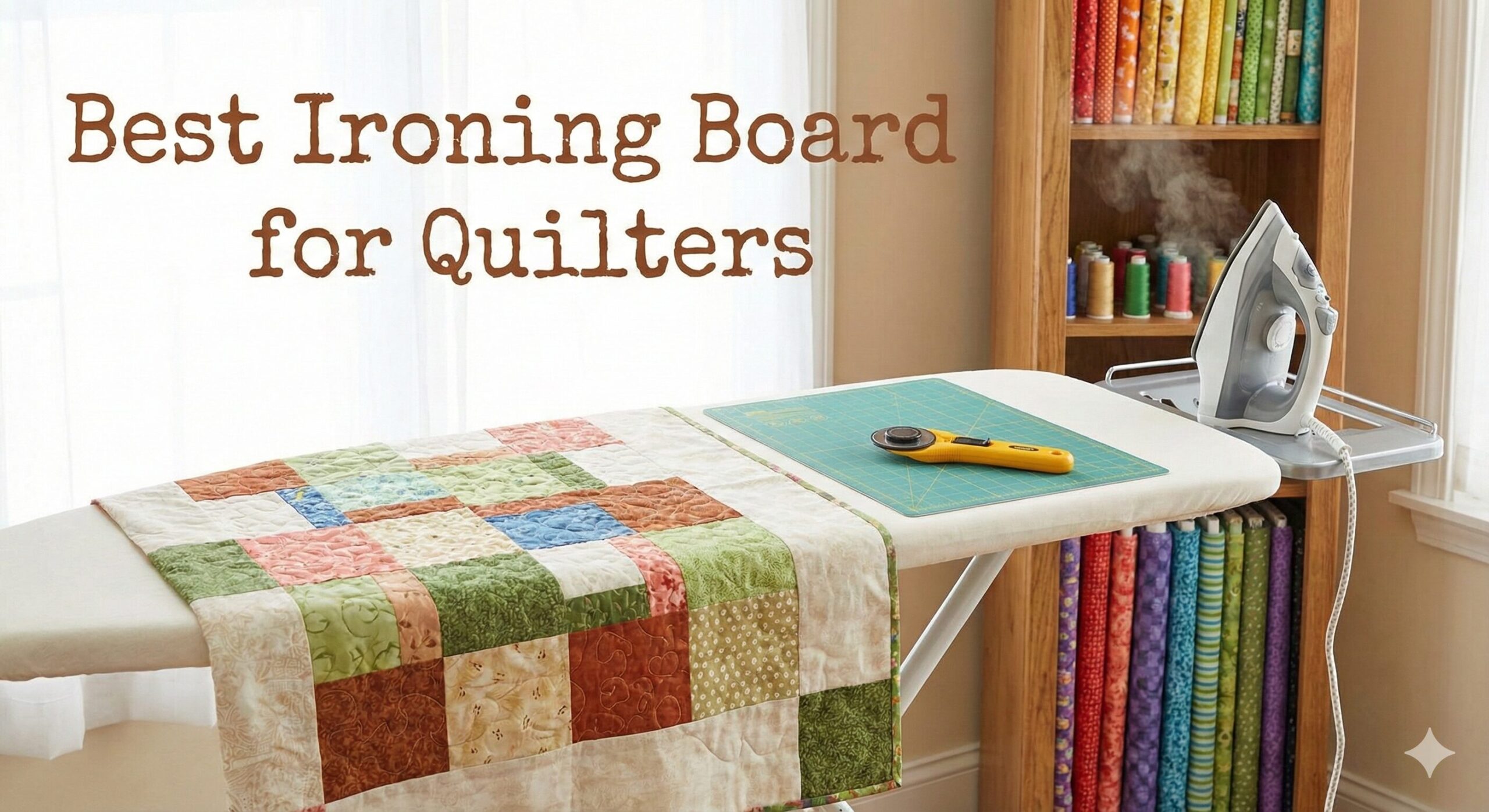
Experience the difference a stable, wide-surface board makes in your piecing accuracy.
Ask any experienced quilter what their most used tool is, and after the sewing machine and rotary cutter, the answer is always the same: the iron. But an iron is only as good as the surface beneath it. If you are still struggling with a rickety, narrow drugstore ironing board that wobbles every time you press a heavy quilt top, you are fighting a losing battle against wonky seams.
Quilting requires a different set of tools than garment care. We need width to handle 45-inch yardage without shifting. We need rock-solid stability to apply pressure for flattening bulky seams. And we need a surface that reflects heat efficiently. In this guide, we’ve tested and ranked the best ironing boards specifically engineered for the rigors of quilting.
1. Reliable 320LB Home Ironing Table
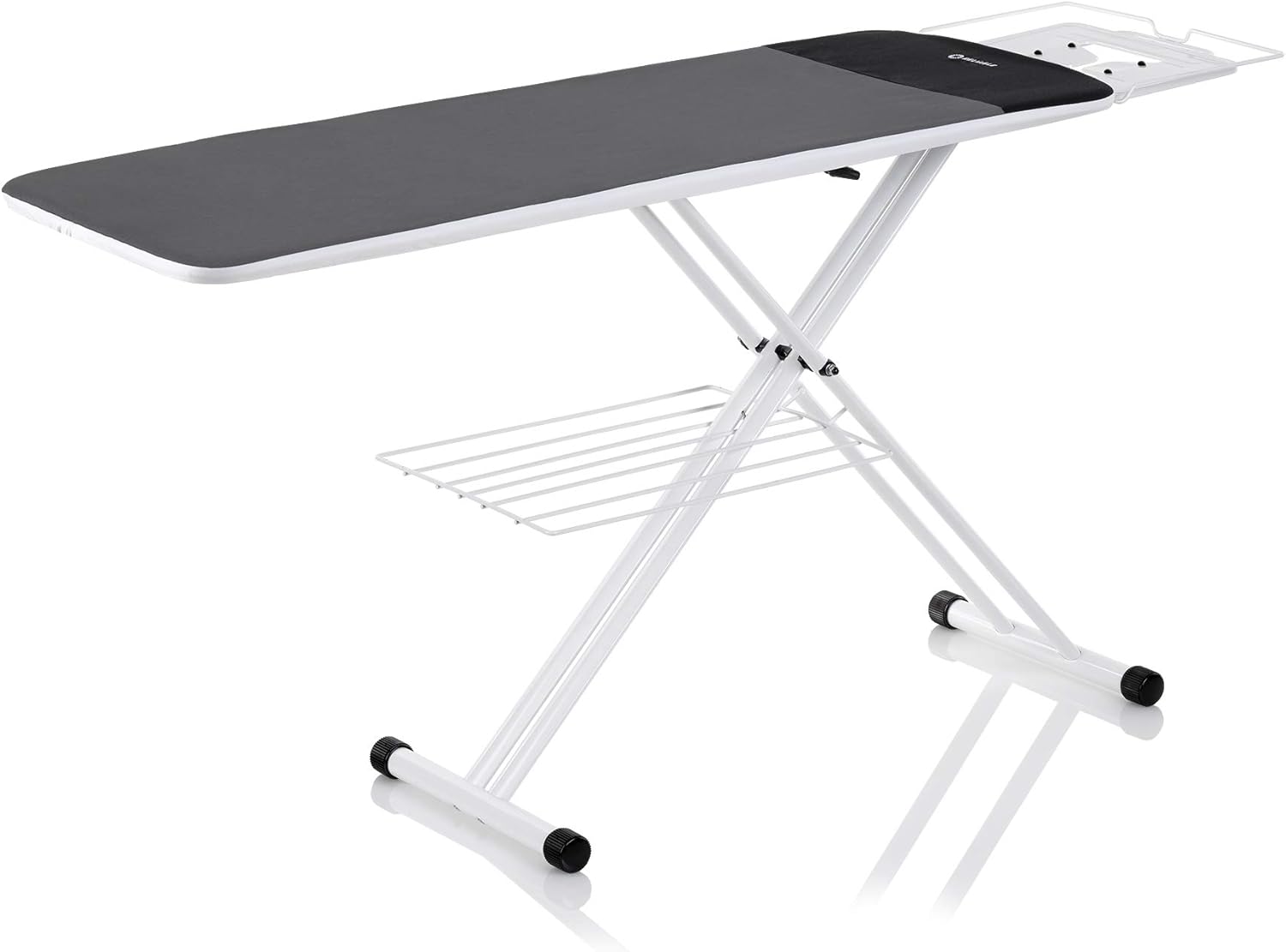
The Reliable 320LB is widely considered the “Holy Grail” of ironing boards in the sewing community. Its defining feature is the 2-in-1 construction. It functions as a standard nose-shaped board for garments, but it comes with a rectangular extension piece that squares off the end.
For quilters, this rectangular shape is non-negotiable. It allows you to press yardage and fat quarters without the fabric falling off the tapered end. The tube-frame construction is incredibly heavy-duty, ensuring zero wobble even when you are leaning into the board to fuse interfacing.
- Surface Width: 18.9 inches (with extension)
- Shape: Convertible (Standard & Rectangular)
- Weight: 29 lbs
- Cover: Heavy-duty cotton with polyester padding
- Massive rectangular surface area ideal for quilt blocks.
- Includes a heat-resistant iron tray that fits steam stations.
- Double-wishbone legs provide industrial-level stability.
- It is heavy to move around.
- Higher price point than standard boards.
If you’re investing in a high-end board like this, you’ll want to pair it with a top-tier iron. Check out our review of the best steam irons for sewing and quilting to complete your pressing station.
2. Brabantia Ironing Board C (Extra Wide)
Brabantia is a European brand known for exceptional build quality. The “Size C” model is their extra-wide version, offering nearly 50 inches of length and 18 inches of width. Unlike the Reliable, this board retains a tapered nose, but the curve is much gentler and wider than a standard board.
The “Solid Steam Iron Rest” version is particularly good for quilters because it accommodates large steam generator irons safely. The frame also features a transport lock, so the board won’t accidentally pop open while you are moving it to your sewing retreat.
- Dimensions: 49 x 18 inches
- Height Adjustable: 29.5 to 38.5 inches
- Frame: 0.98 inch steel tube
- Warranty: 10 Year Guarantee
- Incredible 10-year warranty speaks to durability.
- Child safety lock prevents collapse.
- Extra-wide surface makes pressing backing fabric faster.
- Expensive for a non-rectangular board.
- Feet can slide on some hardwood floors (needs rug grip).

3. Bartnelli Pro Luxury Ironing Board
Stability is the name of the game with the Bartnelli Pro Luxury. If you press hard to get those seams flat, you know the frustration of a board that “walks” away from you. The Bartnelli uses extra-thick metal legs and anti-skid feet to stay planted.
It features a 4-layer cover system that is thicker than most, providing a firm yet cushioned surface that prevents the metal mesh pattern from transferring onto your delicate quilt tops. The height adjustment is also impressive, going up to 38 inches, saving your back during long cutting and pressing sessions.
Speaking of cutting, having a stable surface is crucial for rotary work too. If you are setting up a full workspace, you might want to look at the best quilting cutting mats to place near your new sturdy board.
- Surface: 51 x 19 inches
- Height: 30 – 38 inches (4 presets)
- Material: European Made Steel
- Weight: 20 lbs
- Doesn’t wobble, even on carpet.
- Thick padding prevents grid marks on fabric.
- Steam flow mesh allows moisture to escape quickly.
- The iron rest is fixed metal (can get hot).
- Slightly heavier to fold and store.

4. Hafele Wall-Mounted Ironing Board
Not everyone has a dedicated studio. If your sewing room doubles as a guest bedroom or office, floor space is premium. The Hafele Wall-Mounted board is a genius solution that swivels 180 degrees. When you are done, it folds up and can be hidden behind a cabinet door or simply against the wall.
Unlike cheap fold-down boards, the Hafele is engineered with high-quality steel hardware. It feels surprisingly solid when extended. It’s perfect for quick pressing tasks while piecing blocks, keeping your floor clear for your sewing chair or sewing table.
- Mount: Wall or Drawer options
- Swivel: 180-degree rotation
- Folded Size: Compact and hideable
- Cover: Cotton with foam backing
- Ultimate space saver; keeps floor clear.
- Rotates so you can use it from any angle.
- Very sturdy for a mounted unit.
- Requires installation (drilling into studs).
- Smaller surface area than freestanding boards.

5. DIY Solution: New Zealand Wool Pressing Mat
While not a traditional board with legs, the Wool Pressing Mat has revolutionized quilting in recent years. Made from 100% dense wool felt, these mats absorb heat and reflect it back up into the fabric. This effectively presses both sides of your block at once!
A large 17″ x 24″ wool mat can turn any flat surface—like a dining table or a dedicated cutting counter—into a high-performance ironing station. They are grippy, so fabric doesn’t slide, making them perfect for intricate piecing.
- Material: 100% New Zealand Wool
- Thickness: 1/2 inch
- Portability: High (Fits in tote bags)
- Heat Retention: Excellent
- Presses both sides of fabric simultaneously.
- Grippy texture holds blocks in place.
- Portable for retreats and classes.
- Steam can pass through to the table below (be careful!).
- Has a slight “wet wool” smell when used with heavy steam.

6. Homz Professional Ironing System
If you are setting up your first sewing room on a budget, the Homz Professional is a fantastic entry-level choice that doesn’t feel “cheap.” It features a platinum 4-leg design which offers significantly better stability than the standard T-leg boards found at big-box stores.
It includes a mesh top for better steam penetration and a silicone pad on the iron rest. While it lacks the massive width of the Brabantia or Reliable, it is robust enough for general garment sewing and small to medium quilting projects. If you encounter issues with seams not laying flat, sometimes it’s the machine tension, not the pressing. See our guide on sewing machine troubleshooting if pressing alone isn’t fixing your blocks.
- Surface: 48 x 15 inches
- Height: Up to 39 inches
- Leg Style: 4-leg stance
- Origin: Made in USA
- Great stability for the price point.
- Made in the USA.
- Thick cotton cover included.
- Padding is thinner than premium models.
- Narrower surface requires more shifting of fabric.

Buyer’s Guide: Choosing the Right Board for Quilting
Not all boards are created equal. When browsing, keep these four critical factors in mind:
1. Width is Key
Standard boards are 15 inches wide. Quilting fabric bolts are usually 42-45 inches wide. A wider board (18 inches+) allows you to press the full width of fabric folded once, without it hanging off the sides. This prevents distortion and bias stretch.
2. Stability (The Wobble Factor)
Quilters apply more downward pressure than someone ironing a shirt. Look for “Tube Frame” or “4-Leg” designs. Avoid T-leg designs made of thin wire, as they will flex and bounce under pressure.
3. The Cover Matters
You want a cover that grips. Slick, metallic covers (often sold as “non-stick”) are terrible for quilting because cotton blocks slide around. Look for 100% cotton or canvas covers. If you are making your own, check out our guide on useful sewing clips which can help hold a custom cover in place while you secure it.
4. Steam Flow
The board’s surface should be a metal mesh. This allows steam to pass through the fabric and exit out the bottom. If the board is solid wood (without holes), steam gets trapped, leaving your fabric wet and prone to mildew.
Frequently Asked Questions
Rectangular boards provide a consistent width from end to end. This is crucial when pressing long strips of fabric, binding, or large square blocks. A tapered nose often causes the fabric to hang off, leading to gravity-induced distortion.
The ideal height is hip level. You should be able to place your palms flat on the board without bending your back or hunching your shoulders. Adjustable boards are essential if you switch between sitting and standing.
Absolutely! Placing a wool mat on top of your board gives you the best of both worlds: the ergonomic height of the board and the heat-reflecting properties of the wool.
Heavier boards (20lbs+) tend to stay put better. However, you can also place a rubber mat under the feet or buy a board with specialized anti-skid caps like the Bartnelli.
No. Steam stations are heavy and have large bases. Ensure your board has a “Solid Iron Rest” or a dedicated tank tray that is rated for the weight, otherwise, you risk the board tipping over.