Bernina or Janome: Which Brand Rules the Sewing World?
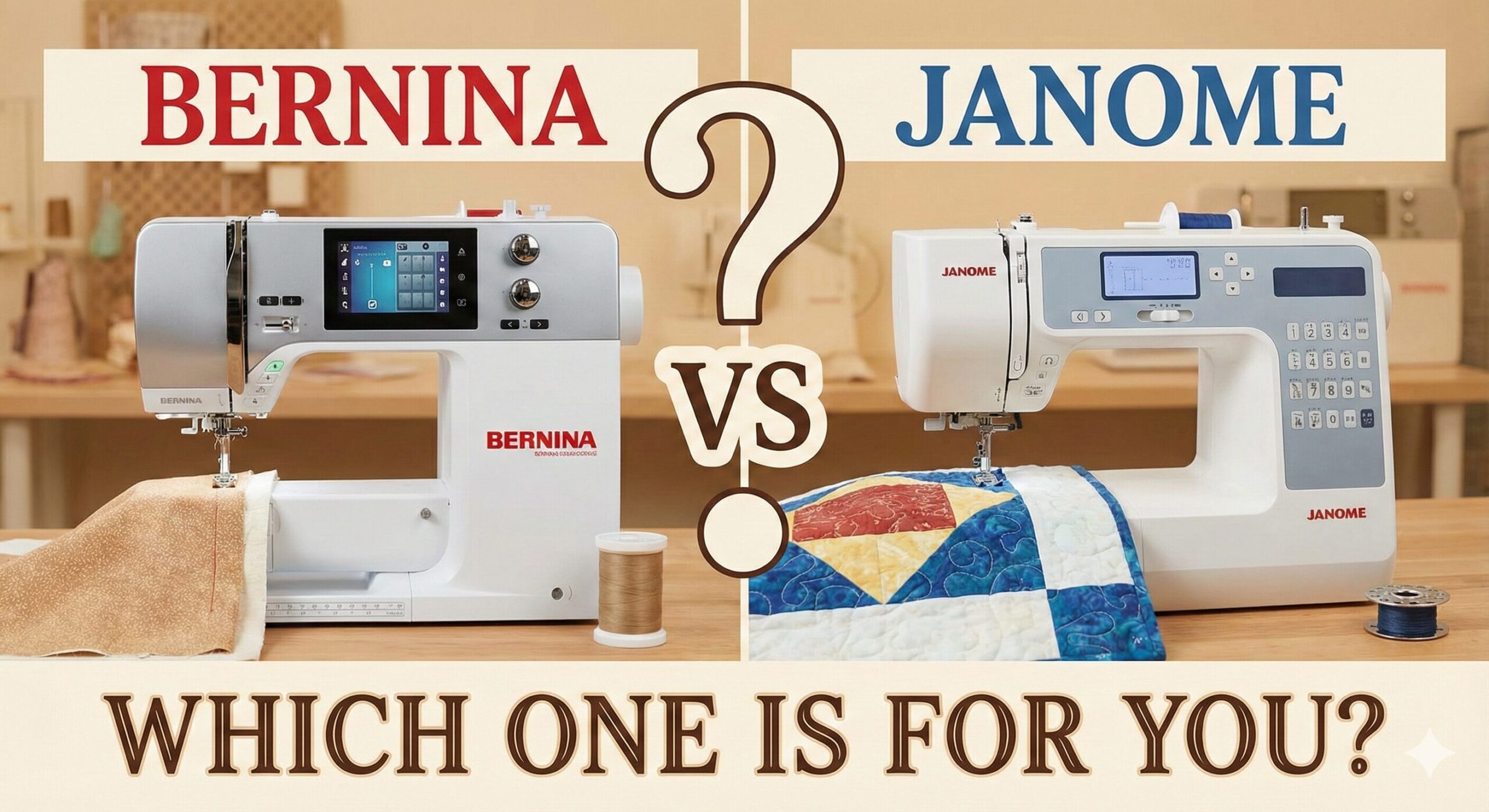
In the high-stakes world of sewing machinery, few debates are as heated as Bernina vs. Janome. It is the classic clash of philosophies: the luxury Swiss precision of Bernina against the practical, innovative Japanese engineering of Janome. If you are standing at this crossroads, you aren’t just buying a machine; you are choosing an ecosystem that will define your sewing journey for the next decade.
Bernina owners often speak of their machines with the same reverence one might have for a luxury car—praising the impeccable stitch quality and robust metal construction. Janome users, on the other hand, champion their machines as the ultimate workhorses—reliable, user-friendly, and offering incredible value without the “luxury tax.”
Whether you are upgrading from a basic model, setting up a professional atelier, or looking for the best sewing machines for intermediate sewers, this guide will dissect the DNA of both brands. We will compare their build quality, quilting features, price-to-performance ratio, and long-term reliability to help you decide which giant deserves a permanent spot on your sewing table.
At a Glance: The Tale of the Tape
Before we dive into the mechanics, here is a high-level overview of how these two industry titans stack up against each other.
| Feature | Bernina (Swiss/Thai) | Janome (Japanese/Taiwanese) |
|---|---|---|
| Best For | Professional sewists, Quilters demanding perfection, Status seekers | Intermediate to Advanced sewists, Pragmatic quilters, Value hunters |
| Price Range | High to Ultra-High ($1,000 – $15,000+) | Budget to High-End ($200 – $10,000) |
| Build Quality | Exceptional. Heavy metal chassis, polished hooks. | Excellent. Rigid metal frames, durable plastics. |
| Hook System | Proprietary CB Hook or B9 Hook (requires oiling) | Top Loading Rotary Hook (mostly oil-free) |
| Feet Compatibility | Proprietary (Expensive, specific shank) | Standard Low/High Shank (Universal options available) |
| Learning Curve | Steep. Geared towards engineers/tech-savvy users. | Gentle. Very intuitive interface. |
Brand Philosophy: Engineering vs. Usability
Bernina: The “Rolex” of Sewing
Bernina is one of the last remaining family-owned sewing machine manufacturers. Their philosophy is rooted in absolute precision. When you buy a Bernina, you are paying for the engineering that allows the needle to penetrate multiple layers of leather without deviating a fraction of a millimeter. Their machines are famous for the “Bernina Stitch Regulator” (BSR), a technology that ensures consistent stitch length during free-motion quilting.
However, this precision comes with complexity. Bernina machines often require the user to understand the mechanics. You have to oil the hook race frequently. If you don’t know sewing machine troubleshooting basics, a Bernina might feel temperamental. But when maintained, they are heirloom pieces.
Janome: The “Honda” of Sewing
Janome (meaning “Snake Eye” in Japanese, referring to their bobbin design) focuses on reliability and accessibility. They were the first to bring a computerized machine to the home market. Their goal is to make sewing invisible—meaning the machine shouldn’t get in your way.
Janome machines are widely praised for being “quietly competent.” They don’t demand as much maintenance as a Bernina. Most models feature a drop-in bobbin system that is jam-resistant, reducing the frequency of needle problems. For sewists who want to sit down and sew without checking oil levels or tension settings every time, Janome is the preferred choice.
Stitch Quality and Performance
This is the core of the debate. If you ask a Bernina owner, they will swear that nothing compares to the “Bernina stitch.” Is it true?
The Bernina Stitch
Bernina machines, especially the 5, 7, and 8 series, use a proprietary hook system (the B9 Hook). This allows for a massive bobbin capacity and a stitch width of up to 9mm (on select models). The stitch quality is indeed superb—tight, defined, and perfectly tensioned. For decorative stitches and buttonholes, Bernina offers a level of customization that is hard to rival.
The Janome Precision
Janome is no slouch. Their high-end models, like the Continental M7 or the Memory Craft series, produce beautiful, straight stitches. Janome utilizes the AcuFeed Flex system, a built-in walking foot mechanism that feeds fabric from the top and bottom. Many quilters argue that AcuFeed is actually superior to Bernina’s Dual Feed for handling thick batting for quilting layers because it prevents shifting more effectively.
Winner: Bernina wins on decorative width and customization; Janome ties or wins on straight-stitch feeding for quilting.

Top Value Pick: Janome 3160QDC-T
An incredible machine for intermediate sewists that balances price and precision perfectly.
Check Price on AmazonThe Cost of Ownership: Feet and Accessories
Here is where the wallet really feels the difference. A sewing machine is a platform; the accessories are what make it versatile.
The Bernina Ecosystem
Bernina feet are proprietary. They do not snap on; they twist and lock onto a specific shank. They are solid metal, beautifully crafted, and expensive. A single Bernina walking foot can cost over $180. If you lose a foot, it hurts. Furthermore, Bernina machines are sensitive to generic needles, so you often have to stick to specific brands to avoid skipped stitches.
The Janome Versatility
Janome uses standard low-shank or high-shank attachments depending on the model. This means you can often use generic snap-on feet or affordable kits found online. While Janome’s branded feet are high quality, you aren’t locked into them. This makes experimenting with different techniques—like using sewing clips and specialty binders—much cheaper.
Additionally, if you are into garment sewing, you might eventually look at a serger. If you compare serger vs coverstitch machines, you’ll find Janome makes excellent entry-level sergers that pair wonderfully with their sewing machines.
Interface and Ease of Use
In the age of computerized sewing machines, the screen is your command center.
Bernina’s Learning Curve
Modern Berninas feature large, responsive touchscreens that feel like navigating a tablet. They offer on-screen tutorials and “Creative Consultants” that suggest settings for fabrics. However, the menu system is deep. It can take weeks to master the layers of customization. It is designed for someone who wants to control every parameter.
Janome’s Intuitive Design
Janome interfaces are widely regarded as the most user-friendly. The icons are large and self-explanatory. You don’t need a manual to figure out how to change stitch length or select a pattern. For beginners or those transitioning from a Janome vs Brother background, the Janome layout feels instantly familiar.

Best Entry into Luxury: Bernina 325
Small but mighty. Experience the Swiss engineering without the 7-series price tag.
Check Price on AmazonHeavy Duty and Specialized Use
Are you sewing silk, or are you sewing boat canvas?
Janome HD Series
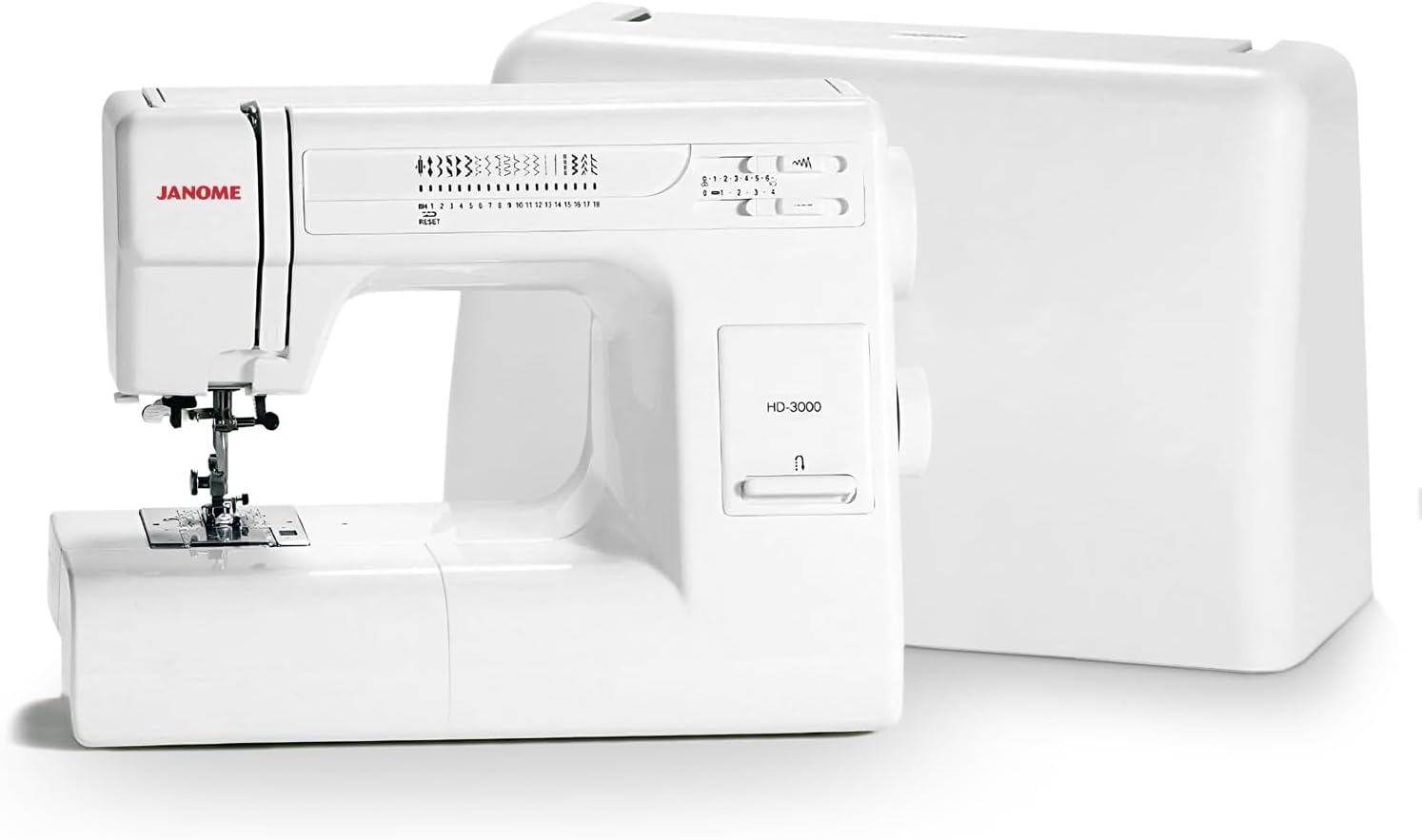
Janome has a specific line of heavy-duty machines (like the HD3000 or HD5000). These are mechanical beasts. If you are reading our guide on what is a mechanical sewing machine, you’ll see Janome cited often. They handle denim layers with ease and are perfect for bag making.
Bernina Power
Bernina doesn’t really have a “Heavy Duty” line because all their machines are heavy duty by design. A standard Bernina 4 or 5 series has incredible piercing power (DC motors). They plow through thick seams that would make lesser machines stall or show error codes (like understanding error E6 on other brands). If you can afford it, a Bernina is a better heavy-duty machine than most “heavy duty” labeled machines.
Regardless of the machine, heavy work requires the right tools. Ensure you are using sharp sewing scissors and strong cotton threads to match the machine’s power.
Pros and Cons Comparison
- Stitch Perfection: The gold standard for stitch definition.
- BSR Technology: The Stitch Regulator is a game-changer for free-motion quilting.
- Resale Value: Holds value exceptionally well, like a luxury car.
- Customization: Infinite control over every aspect of the stitch.
- Build: Solid metal construction, built to last generations.
- Price: Significantly more expensive upfront.
- Accessories: Feet and bobbins are proprietary and costly.
- Maintenance: Requires regular oiling and servicing by certified techs.
- Complexity: Steeper learning curve for beginners.
- Value: Incredible features for the price point.
- Ease of Use: Intuitive interface, great for all skill levels.
- AcuFeed Flex: Superior fabric feeding system for quilting.
- Reliability: “Set it and forget it” durability; less fussy than Bernina.
- Accessories: Accepts generic feet; cheaper to expand your kit.
- Stitch Width: Generally limited to 7mm or 9mm without the same customization depth.
- Feel: Mid-range models can feel “plasticky” compared to a Bernina.
- Lighting: Often dimmer than the stadium lighting on new Berninas.
Frequently Asked Questions
Why are Bernina machines so expensive?
Bernina machines are expensive due to their Swiss engineering, high-quality metal components, rigorous quality control, and proprietary technologies like the Bernina Stitch Regulator (BSR). You are paying for precision, longevity, and brand prestige.
Is Janome good for quilting?
Yes, Janome is excellent for quilting. Their high-end models feature the AcuFeed Flex system, which feeds fabric layers evenly, and they offer generous throat space (like on the Continental M7) at a lower price point than competitors. Pair this with a good cutting mat and rotary cutter, and you have a pro setup.
Can I use generic feet on a Bernina?
Generally, no. Bernina uses a specific attachment system. However, you can buy a “Bernina Shank Adapter” which allows you to attach standard low-shank generic feet to a Bernina machine. While this works, you may lose some of the precision that the solid Bernina feet provide.
Which brand is better for beginners?
Janome is typically better for beginners. Their machines are more forgiving, easier to thread, require less maintenance (no oiling for top-loaders), and have a more intuitive user interface compared to the engineering-focused Bernina. Check our beginner setup guide for more details.
Final Verdict: Which Machine Should You Buy?
The decision between Bernina or Janome ultimately comes down to your budget and your personality as a maker.
Choose Bernina If:
- You are a perfectionist who demands the absolute best stitch quality.
- You are a dedicated quilter who will benefit from the Bernina Stitch Regulator (BSR).
- You view your machine as a long-term investment and don’t mind the high upfront cost and maintenance.
- You want a machine that feels like a heavy, industrial tool refined for the home.
Top Pick: Bernina 570 QE
Choose Janome If:
- You want the best value for your money.
- You prefer a machine that is easy to use right out of the box with minimal fuss.
- You want powerful quilting features (like AcuFeed) without spending $5,000+.
- You like the flexibility of using affordable, generic accessories.
Top Pick: Janome Memory Craft 6700P
Both brands produce exceptional machines. Whether you choose the Swiss precision of Bernina or the Japanese reliability of Janome, your sewing is about to reach new heights. Don’t forget to grab some fresh patterns and get stitching!
Ready to upgrade your sewing studio? Compare the latest prices on Amazon.
Explore Sewing Machines on Amazon