Baby Lock Jazz 2 Review: The Truth About Problems & Performance
Is the massive 12-inch throat space worth the quirks? We analyze the Jazz 2 vs the original Jazz, common tension issues, and if it’s the right upgrade for your sewing room.
For quilters on a budget, the dream is always the same: Maximal throat space for minimal cost. The Baby Lock Jazz 2 was released with exactly this promise. It offers a massive 12-inch throat space—territory usually reserved for machines costing £2,000 or more—for a price that is accessible to the hobbyist.
However, the original Baby Lock Jazz had a rocky launch, plagued by mechanical issues. This led to the release of the Jazz 2. But has Baby Lock truly fixed the gremlins? Or are you trading reliability for space? In this in-depth review, we dive into the Baby Lock Jazz 2 reviews, analyze the improvements, and honestly discuss the Baby Lock Jazz problems that users still face in 2025.
Baby Lock Jazz vs. Jazz 2: The History
To understand the current machine, we must look at its predecessor. The original Baby Lock Jazz (BLMJZ) was a revolutionary concept: a mechanical, high-speed machine with a huge workspace. However, reviews were mixed. Users reported vibration issues, tension headaches, and needle bar failures.
The Baby Lock Jazz 2 is the manufacturer’s response to these complaints. While it looks identical on the outside, the internal chassis was reinforced, and the tension assembly was upgraded to handle the high speeds (1,000 SPM) more consistently. It retains the mechanical simplicity—no computer screens, just dials—which appeals to purists who want power without the fuss.
Key Features: Why Quilters Want It
The Jazz 2 is a hybrid. It sits somewhere between a standard domestic sewing machine and an industrial straight-stitch machine.
1. The 12-Inch Throat Space
This is the main selling point. The 12 inches of space to the right of the needle allows you to roll up a king-size quilt and shove it through. If you are struggling with a standard 6-inch machine, this upgrade feels like moving from a studio flat to a mansion. To make the most of this, we recommend pairing it with a high-quality quilting cutting mat for prepping your large projects.
2. 1,000 Stitches Per Minute (SPM)
It is fast. Standard home machines run at 700-850 SPM. The Jazz 2 hums along at 1,000 SPM. This speed is excellent for long straight lines in quilting or curtain making, but it does require a steady hand.
3. Programmable Needle Up/Down
Despite being a mechanical machine, it includes a few electronic perks. The ability to set the needle to stop in the “down” position is crucial for pivoting corners when quilting or appliquéing.
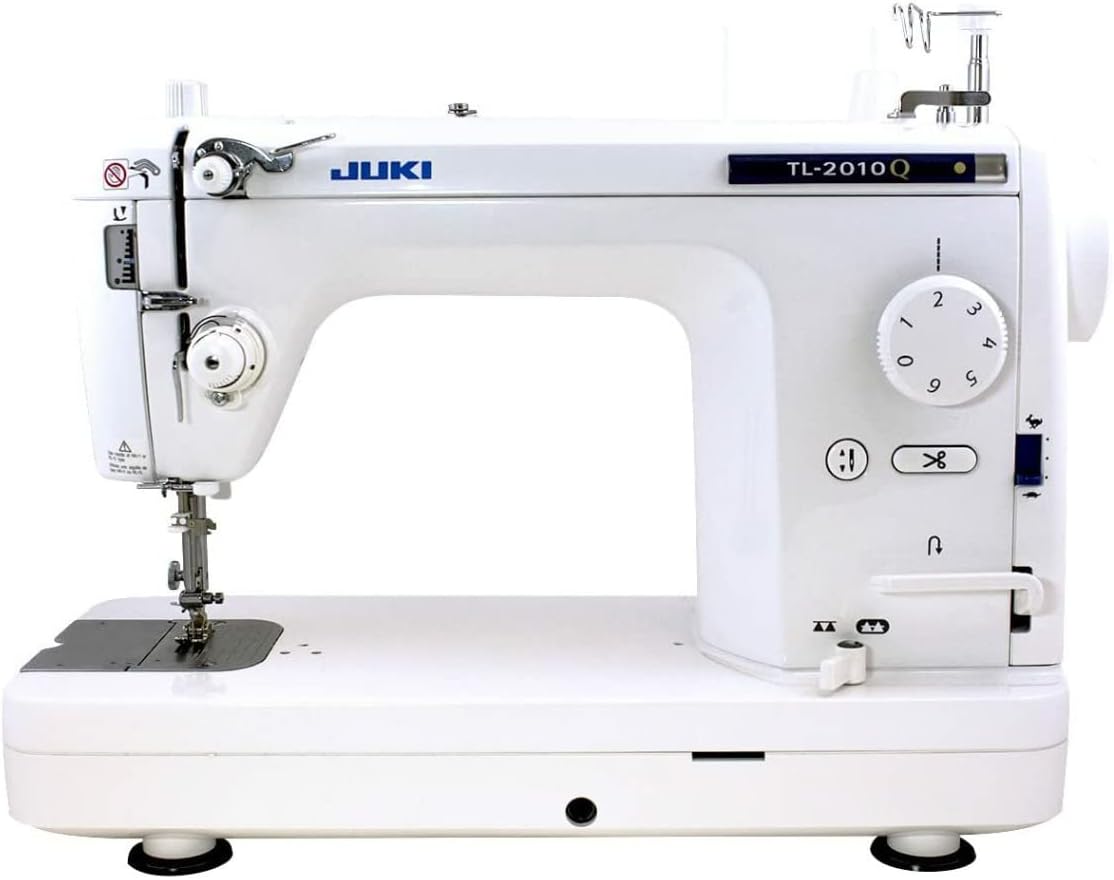
Comparable Option: Juki TL-2010Q
While the Jazz 2 is often dealer-exclusive, the Juki TL-2010Q is its biggest rival on Amazon. It offers similar throat space and speed but with a full aluminum industrial body.
Check Juki PricePerformance Review: The Good and The Bad
The Good
- Free Motion Quilting (FMQ): The visibility is excellent due to 6 LED lights. The large bed makes moving the quilt sandwich easy.
- Walking Foot: It comes with a robust walking foot that handles thick layers of batting reasonably well.
- Knee Lift: Included in the box, allowing you to keep hands on the fabric while raising the presser foot.
- Price: It is significantly cheaper than the Juki TL series or Brother PQ1500SL.
The Bad
- Vibration: At top speed, it vibrates more than a cast-aluminum industrial machine. You need a sturdy table.
- Bobbin Winding: The separate bobbin winder motor is a nice idea but feels flimsy and often winds unevenly.
- Needle Threader: Known to be fragile and finicky.
Common Baby Lock Jazz 2 Problems
No review is complete without addressing the “Jazz problems” users search for. While the Jazz 2 is an improvement, it still has quirks.
1. Tension Nesting (The Bird’s Nest)
Users frequently report thread nesting on the underside of the fabric. This is often not a machine fault but a threading error. The Jazz 2 requires the presser foot to be UP when threading to allow the tension discs to open. If threaded with the foot down, the thread sits on top of the discs, causing zero tension. If you face this, check our guide on sewing machine troubleshooting.
2. Noise and Clunking
This is not a whisper-quiet machine. It is mechanical and large. Some “clunking” is normal, especially when going over thick seams. However, a rhythmic banging usually indicates a dull needle or lint buildup in the bobbin case. Regular maintenance is non-negotiable here.
3. Needle Threader Misalignment
The built-in needle threader is a common point of failure. It uses a tiny metal hook that bends easily. Many users abandon it and thread manually or use a handheld tool. For issues specifically with needles breaking or bending, refer to our article on sewing machine needle problems.
Troubleshooting Tips for Jazz Owners
- Skip Stitches? Change the needle. The Jazz 2 prefers high-quality needles (Schmetz or Organ). Match the needle size to your thread weight.
- Fabric Not Feeding? Check the presser foot pressure dial on the top left. For thick quilts, reduce the pressure. For thin cottons, increase it.
- Machine Jammed? This is a horizontal bobbin machine. Ensure the bobbin is dropped in so the thread forms a “P” shape (counter-clockwise).
Comparison: Jazz 2 vs. The Competition
If the potential problems of the Jazz 2 worry you, consider these alternatives:
1. Juki TL-2010Q
Verdict: Better build quality. The Juki is a semi-industrial straight stitch machine. It is faster (1500 SPM) and heavier. However, it only does straight stitches (no zig-zag). If you need zig-zag, stick with the Jazz. Read more in our Juki sewing machine reviews.
2. Brother PQ1500SL
Verdict: Similar to the Juki but often cheaper. Also a straight-stitch only machine. It has a very reliable pin-feed mechanism for velvet and difficult fabrics.
3. Janome 6700P
Verdict: A significant price jump, but you get computerized precision, a massive 10-inch throat, and professional reliability.
Final Verdict: Should You Buy the Baby Lock Jazz 2?
The Baby Lock Jazz 2 occupies a unique niche. It is the only machine at its price point that offers 12 inches of throat space AND zig-zag stitching.
Buy it if:
• You are a quilter on a budget who needs space for large quilts.
• You need zig-zag or decorative stitches (which the Juki TL series lacks).
• You are comfortable with mechanical machines and manual tension adjustments.
Pass if:
• You want “push button” perfection.
• You are sensitive to machine noise/vibration.
• You primarily sew garments and don’t need the massive throat space.
Frequently Asked Questions
Yes, the Baby Lock Jazz 2 typically comes with a walking foot included in the accessory box, which is essential for feeding quilt layers evenly.
No, the Jazz 2 is primarily a mechanical machine. However, it does have a DC motor and electronic speed control, along with a programmable needle up/down button.
Yes, because it has zig-zag capability, the Jazz 2 can accommodate a twin needle for decorative topstitching or hemming knits. You will need a second spool pin (usually included).
A rhythmic clunk usually indicates a dull needle punching the fabric rather than piercing it, or a lack of oil. Clean the bobbin area and change the needle first.