Juki Sewing Machine Reviews: Industrial Power for Your Home Studio
From the legendary TL-2010Q straight stitcher to the high-tech HZL-F600, we break down the best Juki machines for quilting, garments, and heavy-duty sewing.
If you ask a professional tailor or a serious quilter what machine sits on their table, the answer is often “Juki.” Unlike brands that focus on flashy touchscreens and hundreds of useless decorative stitches, Juki focuses on one thing: performance.
Originating from industrial sewing roots in Japan, Juki brings commercial-grade durability to the home market. Their machines are known for piercing through thick denim like butter, creating perfect buttonholes, and running at speeds that leave other domestic machines in the dust. In this guide, we review the top 5 Juki models available in 2026 to help you decide if you need a mechanical workhorse or a computerized marvel.
Not sure where to start? Check our general sewing machine buying guide for a broader overview of features.
The Juki Advantage: Industrial Tech at Home
Most home sewing machines use an oval feed motion, which means the feed dogs are only in contact with the fabric for a split second. Juki uses a Box Feed system (adopted from their industrial machines). The feed dogs move in a square box shape, staying in contact with the fabric longer.
The Result? No shifting layers, no shrinking on lightweight fabrics, and the ability to feed thick hems (like jeans) without stalling. It is a game-changer for precision.
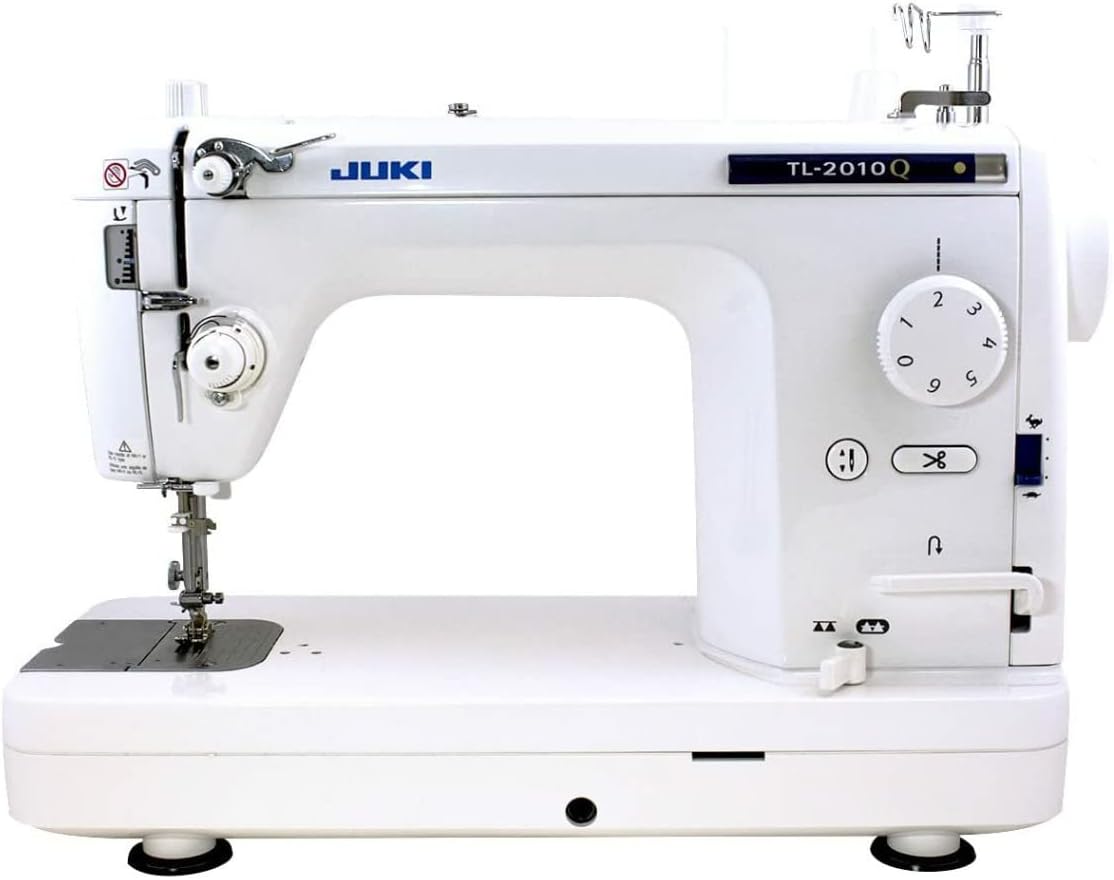
Juki TL-2010Q High Speed Semi-Industrial
| Speed | 1,500 SPM (Stitches Per Minute) |
| Stitch Type | Straight Stitch Only |
| Throat Space | 9 inches (Large) |
| Weight | 25.4 lbs (Aluminum Die-Cast) |
The Juki TL-2010Q is a legend in the quilting community. It is a single-needle, lockstitch machine that does one thing—straight stitching—perfectly. It is essentially a portable industrial machine.
Why it wins: The speed is blistering (1,500 SPM), yet the vibration is minimal due to the heavy aluminum frame. It features an automatic thread trimmer (on the pedal!), a knee lift lever to raise the presser foot hands-free, and a sub-tension system that prevents thread twisting. If you are piecing quilts or sewing heavy canvas/leather, this is the machine you want. We recommend pairing it with a large quilting cutting mat to maximize your workflow.
Pros
- Incredible speed and piercing power.
- Automatic thread trimmer cuts top & bobbin threads.
- Large extension table included.
- Knee lifter allows hands-free fabric pivoting.
Cons
- Straight stitch only (no zig-zag).
- Lighting could be brighter (LEDs are small).
- Requires regular oiling (manual).

Juki HZL-F600 Computerized Sewing & Quilting
If you need more than just a straight stitch, the HZL-F600 “Exceed” series is the answer. It combines Juki’s industrial Box Feed technology with 225 built-in stitches and computerized convenience.
Standout Features: It excels at buttonholes. Using a unique sensor method, it sews 16 different types of industrial-quality buttonholes perfectly every time. It also features a “Random Stitch” setting for quilting, which mimics the look of hand-stitching. The huge extension table and knee lift make it a direct competitor to much more expensive machines from Bernina or Janome.
Pros
- Box Feed system handles thin and thick fabrics equally well.
- Industrial-quality buttonholes.
- Foot pedal with thread trimming function (heel tap).
- Independent bobbin winder (wind while you sew).
Cons
- Steep learning curve for beginners.
- Interface looks slightly dated compared to modern touchscreens.
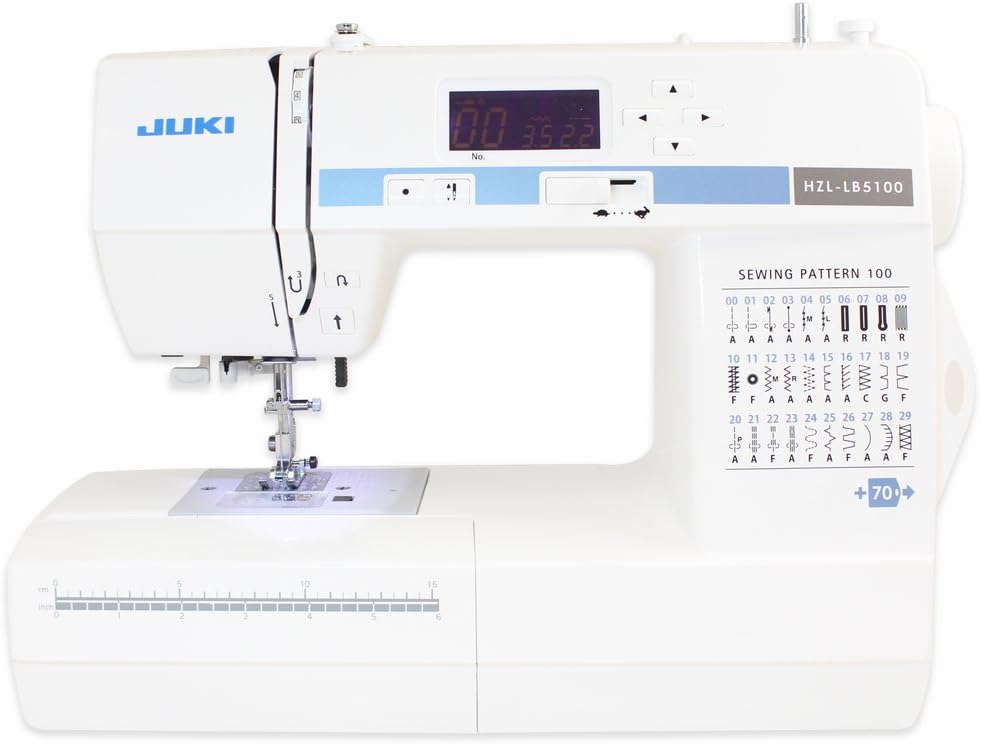
Juki HZL-LB5100 Computerized Machine
You don’t have to spend a fortune to own a Juki. The LB5100 is an excellent entry-level computerized machine that offers Juki reliability in a compact package. It offers 100 stitch patterns and a simple LCD screen.
Why it’s great: It is incredibly quiet and smooth. It includes a speed control slider (great for teaching kids or beginners), a needle up/down button, and an auto-lock stitch feature. While it lacks the industrial power of the TL-2010Q, it is perfect for garment sewing, crafting, and basic home decor.
Pros
- Affordable price point.
- Very quiet operation.
- Speed control slider adds precision.
- Compact and portable (good for classes).
Cons
- Not built for heavy leather/canvas.
- Plastic bobbin cover feels a bit flimsy.
- No thread cutter on bobbin winder.

Juki MO-654DE Pearl Line Serger
A sewing room isn’t complete without a serger for professional finishes. The MO-654DE is widely considered the best mid-range serger on the market. It is a 2/3/4 thread overlock machine with built-in rolled hemming.
Performance: It is fast, stable (thanks to suction cup feet), and cuts through layers of fabric cleanly. The color-coded threading guide makes the daunting task of threading a serger manageable. If you are looking to expand your finishing capabilities further, you might also want to read our Juki MCS-1500 Coverstitch review to see how a coverstitch machine complements a serger.
Pros
- Differential feed prevents wavy seams on knits.
- Built-in rolled hem (no plate change needed).
- Safety switch prevents operation when cover is open.
- Uses standard sewing needles.
Cons
- Lower looper threading can be tricky at first.
- No free arm (harder for cuffs/sleeves).

Juki DX-2000QVP Professional
This is the big brother to the F600. The DX-2000QVP takes everything great about the Exceed series and adds specific professional quilting features. It includes the “Float Function,” which slightly raises the presser foot to prevent uneven seams on thick quilt sandwiches.
It also features a Straight Stitch Slide Plate. You can slide a lever to close the needle hole, instantly converting it into a straight-stitch machine for handling ultra-lightweight fabrics without them getting sucked into the machine. It is a masterpiece of engineering.
Check Price on AmazonBuying Guide: Choosing Your Juki
When buying a Juki, consider your primary use case:
- The Quilter: You need throat space and speed. The TL-2010Q is your best bet. Its vertical rotary hook and sub-tension system are designed for free-motion quilting.
- The Garment Maker: You need versatility (buttonholes, zig-zag, stretch stitches). The HZL-F600 is the sweet spot, offering industrial feeding with computerized variety.
- The Beginner: Don’t overspend on features you won’t use. The HZL-LB5100 provides the reliable Juki stitch quality without the intimidating interface.
If you encounter issues with any machine, refer to our sewing machine troubleshooting guide for help with tension or jamming.
Frequently Asked Questions
Juki machines use metal internal frames and industrial-grade components (like the Box Feed system) that last longer and perform better than the plastic components found in cheaper big-box store brands. You are paying for longevity and precision.
No. The TL-2010Q is a straight-stitch only machine. This specialization allows it to be faster and more precise than multi-purpose machines, but you will need a separate machine for zig-zag or buttonholes.
Yes, especially the mechanical models like the TL-2010Q. They require regular oiling at specific points (marked in the manual) to run smoothly. Computerized models like the F600 often have “sealed” systems that require less frequent maintenance by the user.
Yes, the TL-2010Q and HZL-F600 can handle garment-weight leather and heavy denim easily, thanks to their powerful motors and box feed systems. Use a leather needle and Teflon foot for best results.