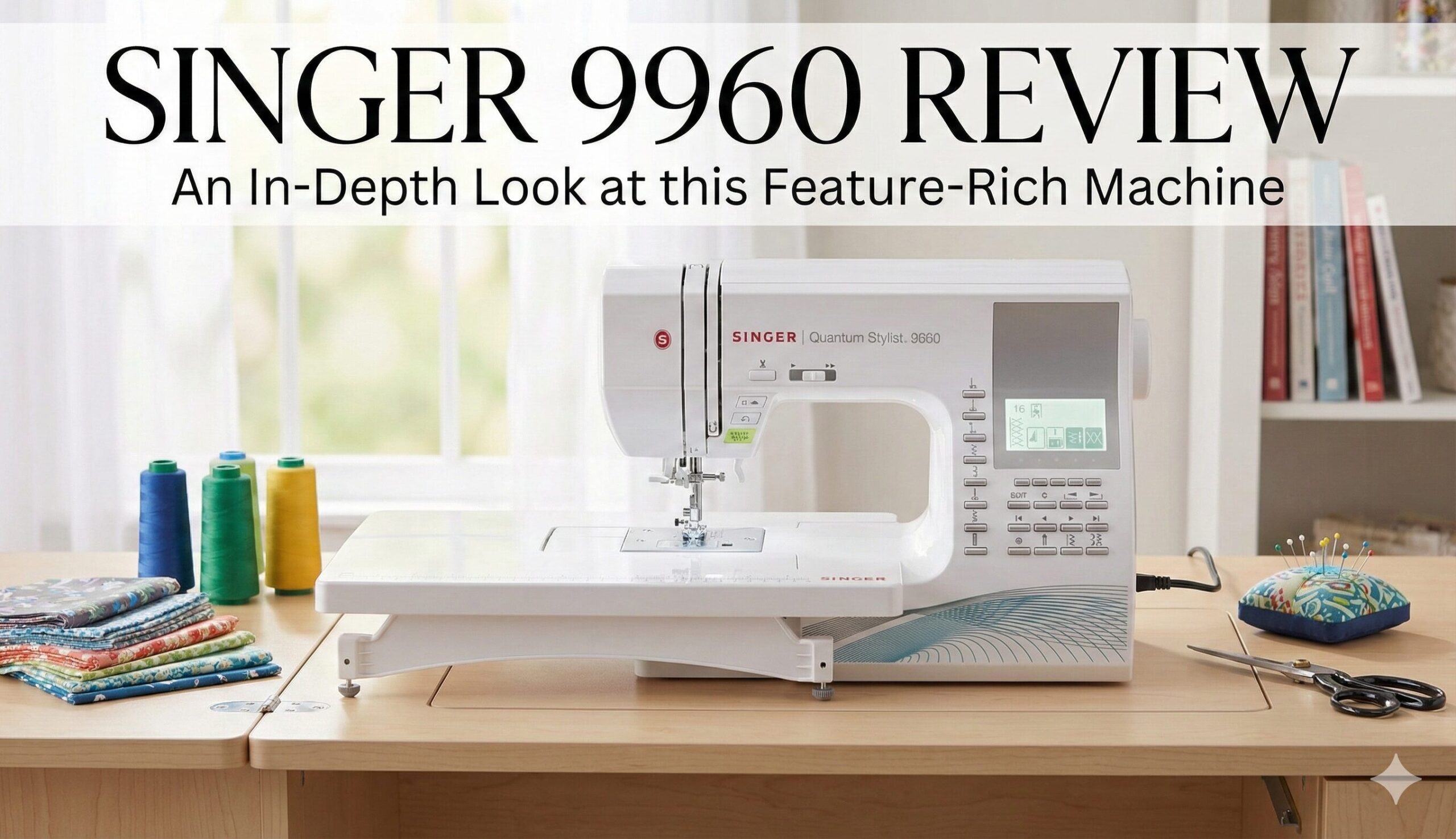
Singer 9960 Review: Why The Quantum Stylist Is Still The Value King
1. Introduction & Overview
In the crowded world of home sewing machines, few models achieve “legendary” status. The Singer Quantum Stylist 9960 is one of them. For years, it has been the go-to recommendation for sewists who want high-end computerized features—like automatic thread cutting, massive stitch libraries, and extension tables—without paying the premium prices of European brands.
But as we move further into the 2020s, with newer models boasting color touchscreens and WiFi, does the 9960 still hold up? Is it truly the best computerized sewing machine for the money, or has it become an outdated relic? In this comprehensive review, we dive deep into the build quality, performance, and quirks of the Singer 9960 to help you decide if it deserves a spot on your sewing table.
2. The “Everything Box” Concept
The Singer 9960 is often called the “Everything Box” because Singer seemingly threw every accessory they had into the package. When you open it, you aren’t just getting a sewing machine; you are getting a complete sewing studio. It comes standard with 18 presser feet, a hard dust cover, and a wide extension table—accessories that typically cost hundreds of dollars extra on competing machines.
Under the hood, it features a heavy-duty metal frame interior, providing rigid stability for quilting and heavy garment construction, reducing vibrations when sewing at top speed.

Get the Complete Sewing Package
Stop buying expensive add-on feet. The Quantum Stylist 9960 includes 18 presser feet, a hard cover, and an extension table right out of the box.
Check Price on Amazon3. Interface and Ease of Use
The 9960 features a clear, backlit monochromatic LCD screen. Stitches are selected using a button panel. While it isn’t as flashy as modern tablets, it is incredibly fast. You don’t have to navigate through five sub-menus to find a zigzag stitch; the most common utility stitches have dedicated, instant-access buttons.
The machine also features “Autopilot” controls that make sewing a breeze:
- Start/Stop Button: Allows you to sew without pressing the foot pedal.
- Speed Slider: Limits the maximum speed, which is a lifesaver for intricate applique curves.
- Needle Up/Down: Programmable needle stop position, crucial for pivoting around corners.
For beginners, the setup is straightforward thanks to the top-loading drop-in bobbin with a clear cover, so you always know how much thread you have left.
4. 600 Built-In Stitches Explained
Do you really need 600 stitches? Probably not for everyday mending. But having them unlocks boundless creativity. The library includes:
- Utility Stitches: Strong straight stitches, stretch stitches for knits, and overcasting edges to prevent fraying.
- Decorative: Vines, flowers, geometric patterns, and intricate scrollwork.
- Alphanumeric Fonts: 5 different fonts for monogramming. While not as flexible as a dedicated embroidery machine, it’s perfect for stitching quilt labels or personalizing bags.
- Buttonholes: 13 styles of fully automatic, one-step buttonholes that are sized exactly to the button you place in the foot.
5. Automatic Thread Cutter Magic
If there is one feature that convinces people to upgrade to the Singer 9960, it is the automatic thread cutter. By pressing the small scissor button above the needle, the machine automatically pulls both the top and bobbin threads to the underside of the fabric and snips them.
This feature alone saves significant amounts of thread over a year and keeps your work area immaculately tidy, free from long, dangling thread tails that need to be manually trimmed with snips.
6. Quilting Capabilities and Extension Table
The 9960 is a darling of the quilting community. Standard machines offer a tiny harp space that makes rolling large quilts a nightmare. The 9960 mitigates this by including a massive, snap-on extension table that expands your flat working surface dramatically.
Furthermore, it comes with an Even Feed / Walking Foot in the box. This foot is absolutely vital for quilting, as it pulls the top layer of fabric at the exact same rate the feed dogs pull the bottom layer, preventing puckers. We recommend pairing this setup with high-quality cutting mats to ensure your initial piecing is perfectly squared.
7. Handling Denim and Heavy Fabrics
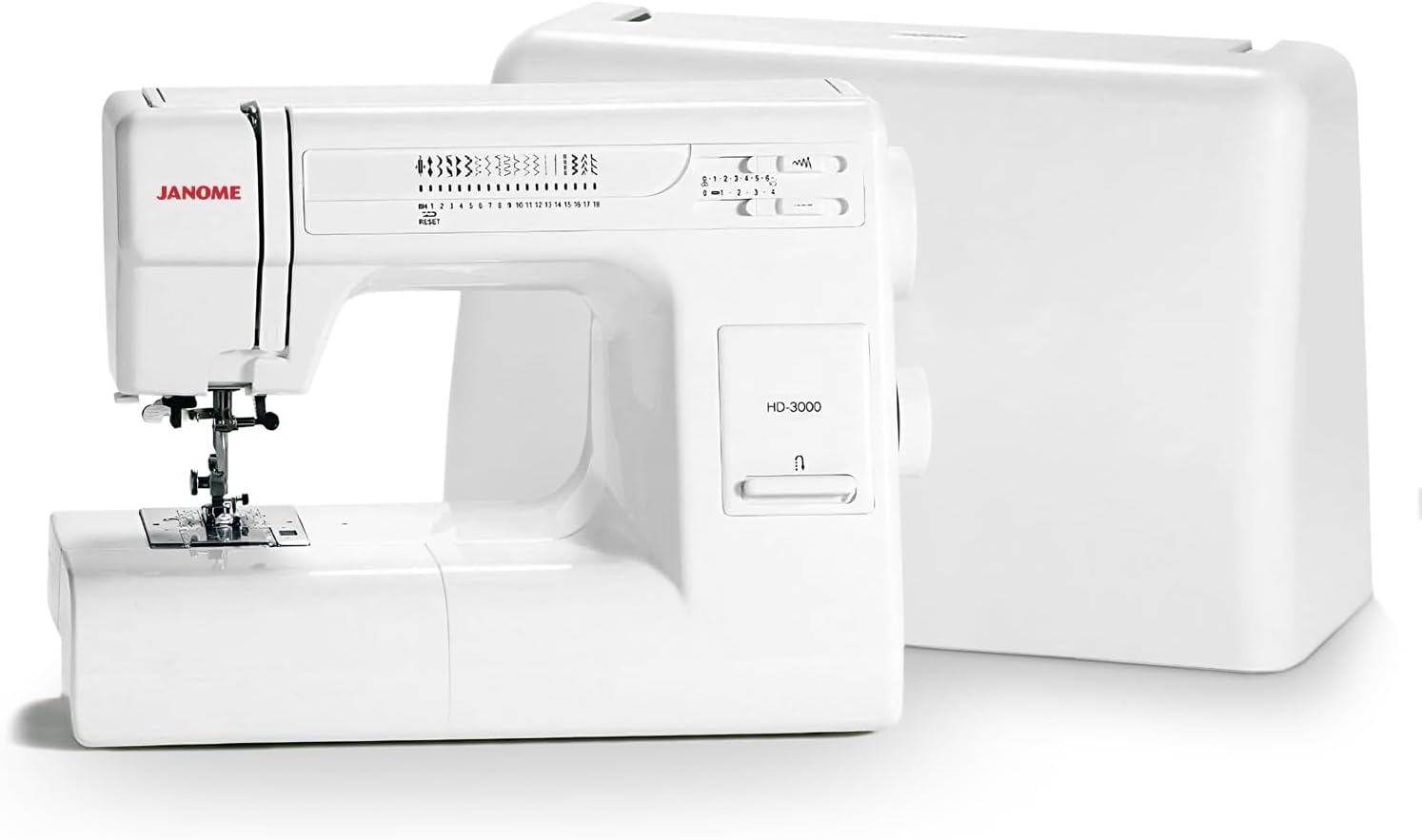
Can the Singer 9960 sew jeans? Yes. The internal metal frame gives it enough rigidity to handle hemming heavy denim. However, it is a computerized machine, not a dedicated mechanical beast like the Janome HD-3000.
To sew heavy layers successfully, you must use a fresh Denim needle (size 90/14 or 100/16) and utilize the included clearance plate to get over thick flat-felled side seams. If you push the motor too hard on 6 layers of denim, you might encounter needle breakage.
8. Delicate Fabrics and Precision Sewing
Where the 9960 truly excels is precision. The 7-point feed dog system grips lightweight, slippery fabrics like silk, chiffon, and organza exceptionally well without sucking them down into the bobbin case.
The accessory box includes specialty feet like a rolled hem foot and a blind hem foot, which are fantastic for finishing sheer evening wear and delicate dressmaking projects with a professional touch.
9. Motor Power and Stitch Speed
The DC motor inside the Quantum Stylist powers the machine to a maximum sewing speed of 850 stitches per minute. While this is slightly slower than professional straight-stitch machines (which can hit 1,500 SPM), it is more than fast enough for home decor, garment sewing, and piecing. The electronic speed control ensures that even when sewing at a crawl, the needle retains full piercing power.
10. Comparison: Singer 9960 vs. Brother HC1850
When shopping for a computerized machine, the Brother HC1850 frequently pops up as a cheaper alternative.
While the Brother is a fantastic, lightweight machine, it only has 130 stitches compared to Singer’s 600. The Brother lacks the luxury of the automatic thread cutter and feels significantly lighter due to more plastic internal components. If you plan to travel to sewing classes frequently, the Brother is easier to carry, but the Singer offers much more room to grow your skills.
11. Comparison: Singer 9960 vs. Singer 9985
The Singer 9985 is the modern, upgraded sibling to the 9960. It features a full-color LCD touchscreen and over 960 stitches.
If you love visual technology, digital editing on screen, and the absolute maximum number of decorative stitches, the 9985 is visually superior. However, a vast majority of sewists actually prefer the older 9960. Why? Physical buttons are faster to press than navigating a touchscreen, and they are inherently more durable over a ten-year lifespan. Plus, the 9960 is generally much more affordable.
| Feature | Singer 9960 | Brother HC1850 | Singer 9985 |
|---|---|---|---|
| Built-in Stitches | 600 | 130 | 960+ |
| Interface | Physical Buttons + LCD | Physical Buttons + LCD | Color Touchscreen |
| Thread Cutter | Auto Scissor Button | Manual Side Cutter | Auto Scissor Button |
| Included Feet | 18 | 8 | 13 |
What We Love (Pros)
- Incredible value: The 18 included feet save hundreds of dollars.
- Automatic thread cutter saves time and thread.
- Includes a hard shell cover for safe storage.
- 600 stitches and 5 fonts offer endless creativity.
- Included extension table is perfect for free-motion quilting.
What Could Be Better (Cons)
- Bobbin area can be prone to “birds nesting” if not threaded perfectly.
- The two LED lights are dim compared to newer modern models.
- Throat space is standard; fitting a king quilt is very tight.
- The automatic needle threader lever feels somewhat flimsy.
12. Final Verdict: The Value King
The answer is a resounding yes. The Singer Quantum Stylist 9960 remains the absolute king of value in the computerized sewing market. While newer machines offer touchscreens and WiFi, the 9960 focuses on what truly matters to a sewist: pristine stitch quality, mechanical reliability, and an accessory package that is unmatched.
If you are looking for a machine that can effortlessly transition from constructing a delicate silk blouse to piecing together a heavy quilt without needing to run to the store to buy extra parts, this is the machine for you.

Ready to Upgrade Your Sewing Studio?
Don’t miss out on the ultimate “Everything Box”. The Singer 9960 is the perfect blend of professional features and home-user affordability.
Check Latest Price on Amazon